


unBinding Bodies
Lotus Shoes and Corset
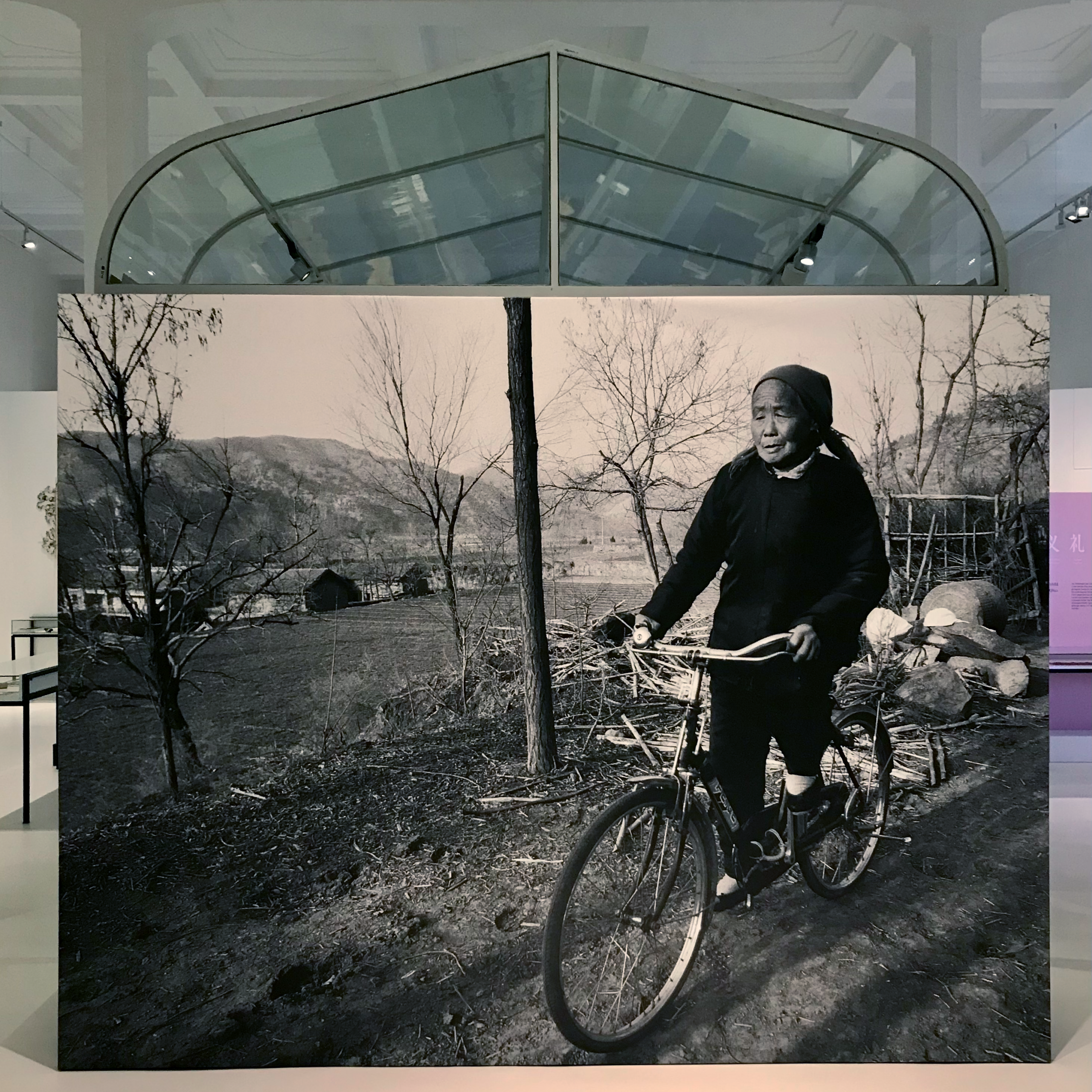
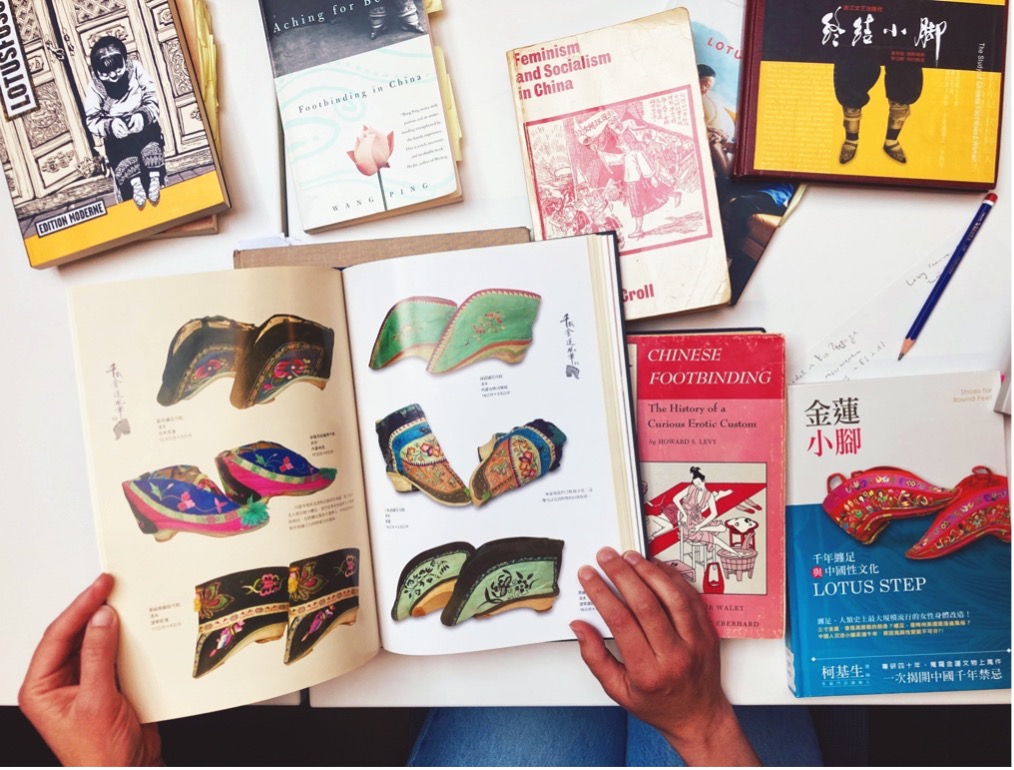
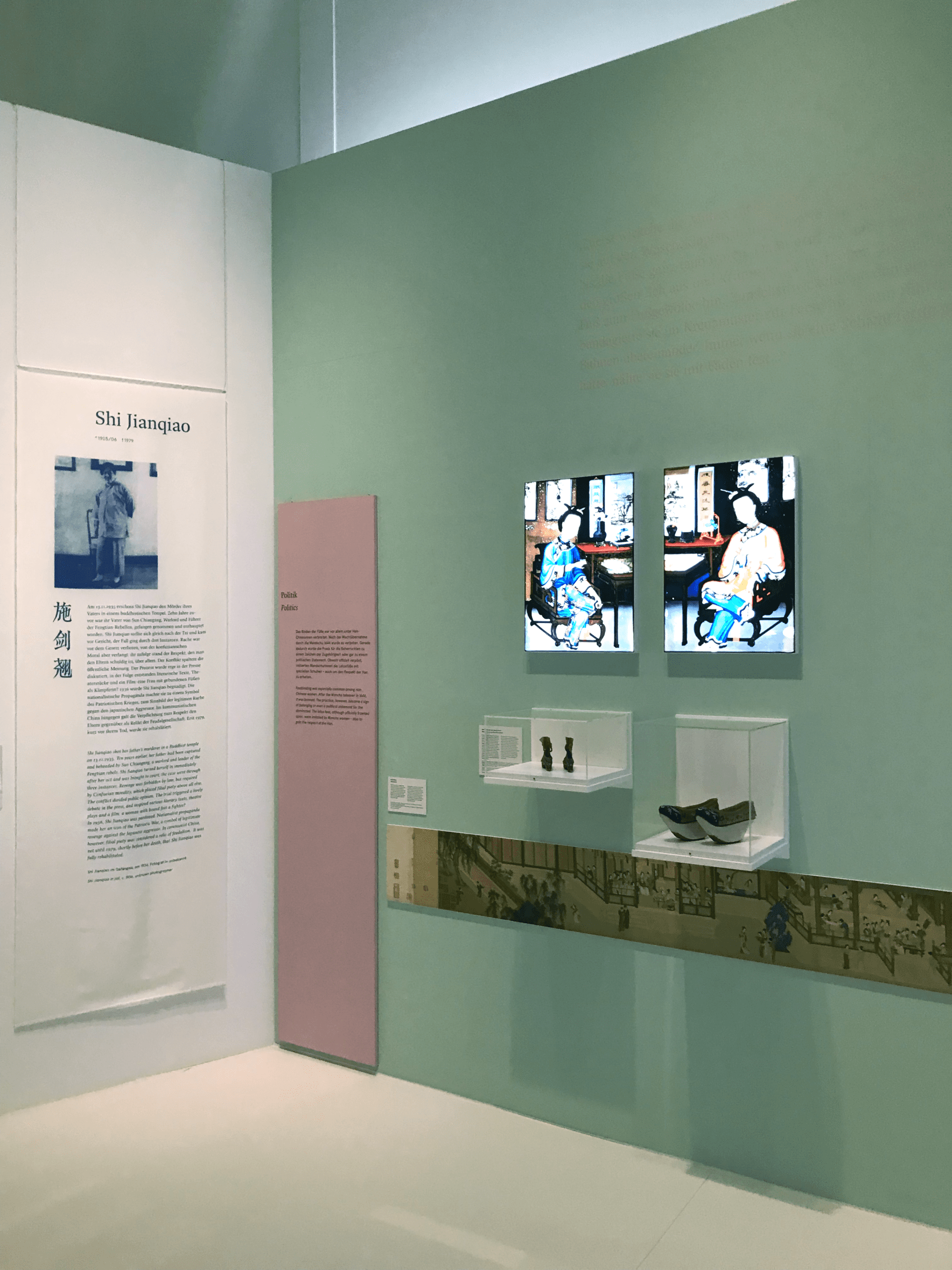
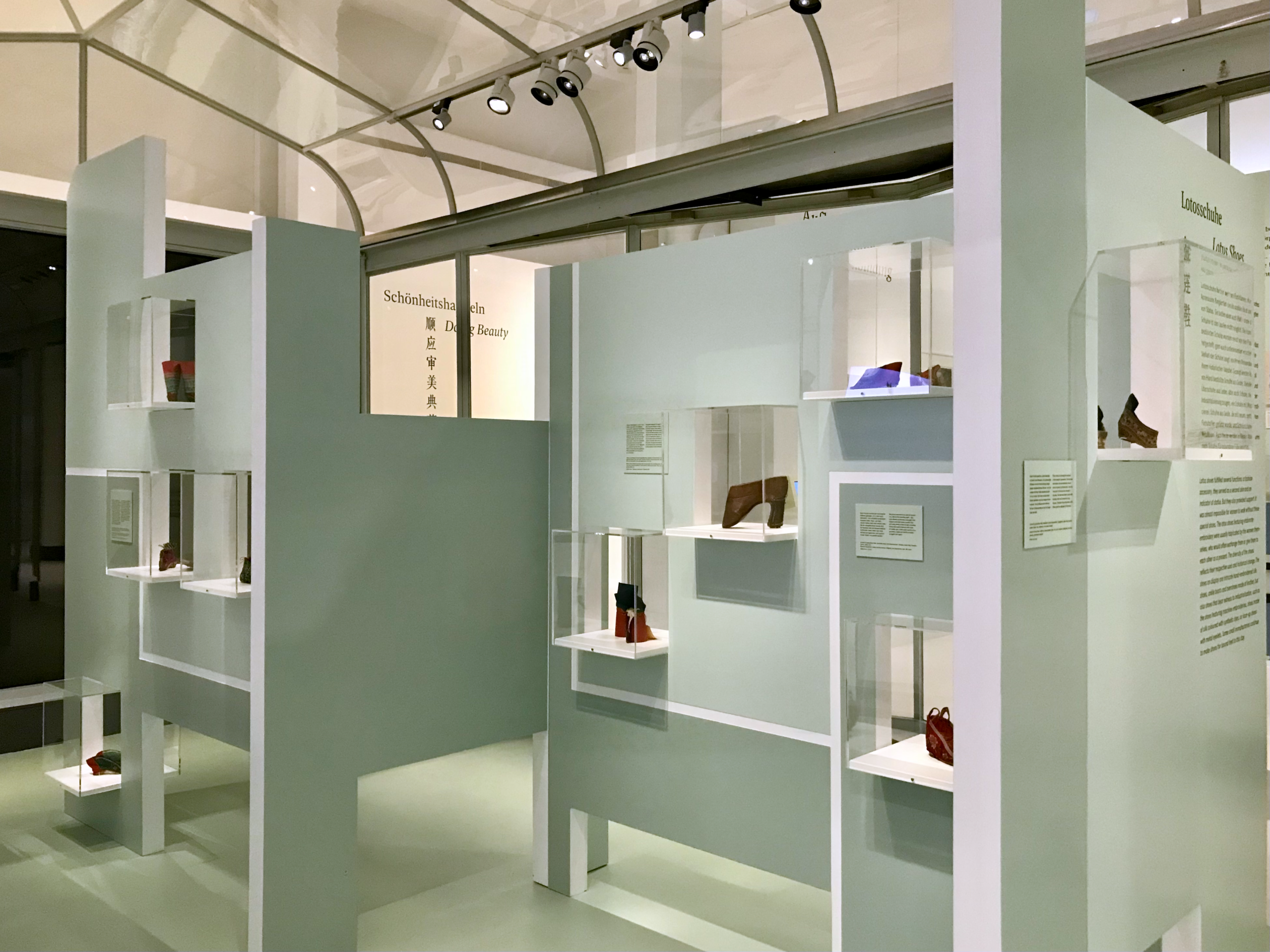
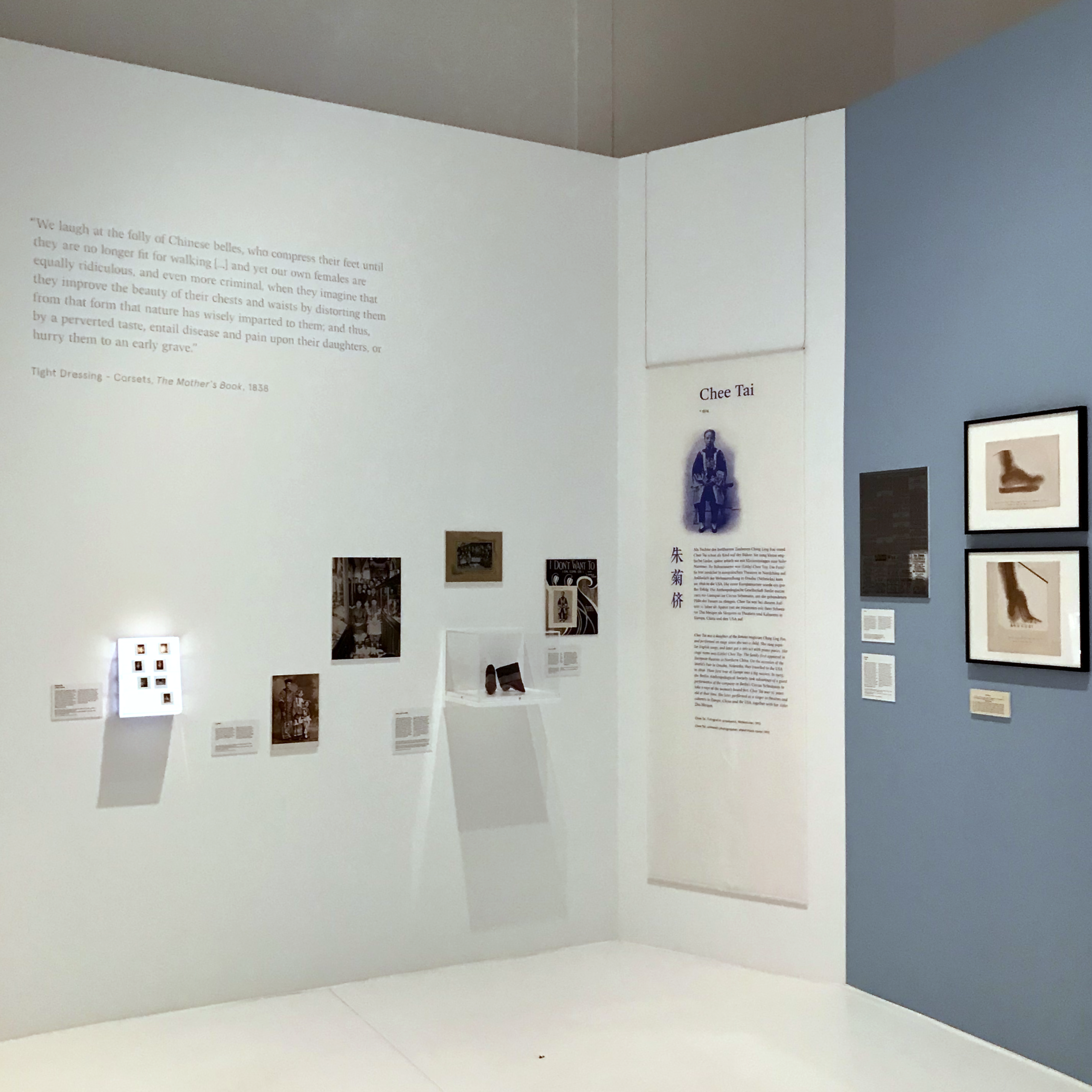
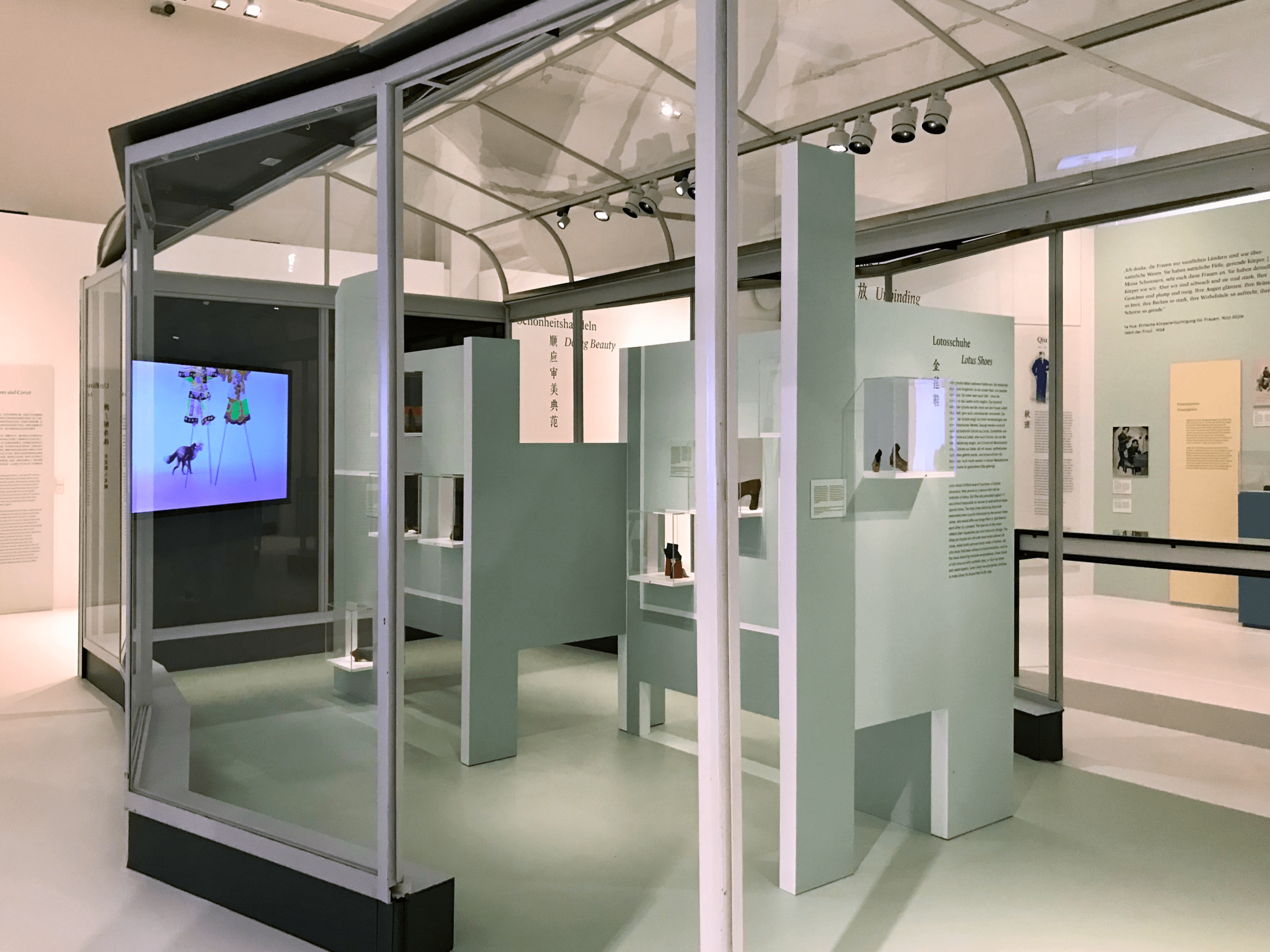
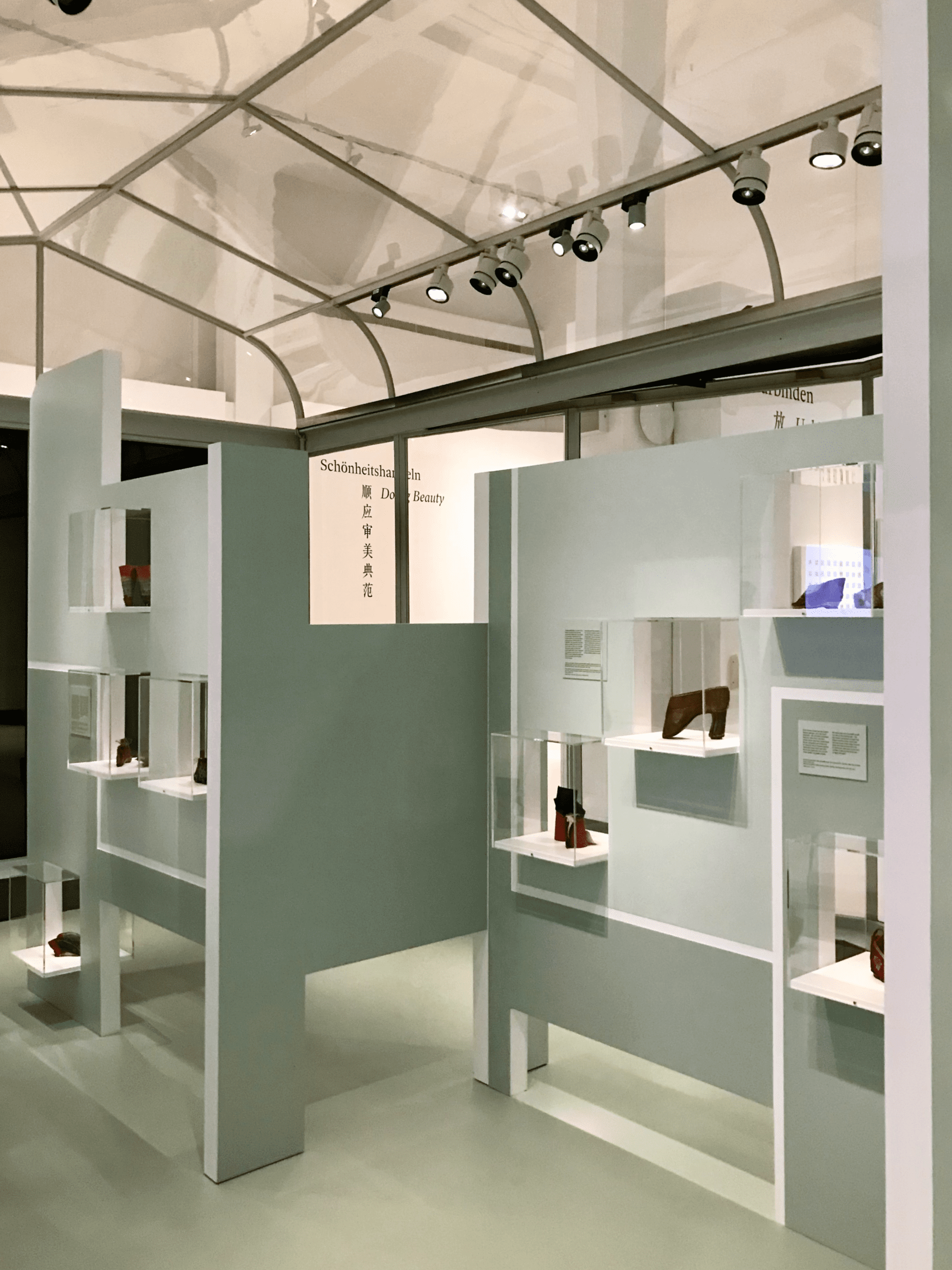
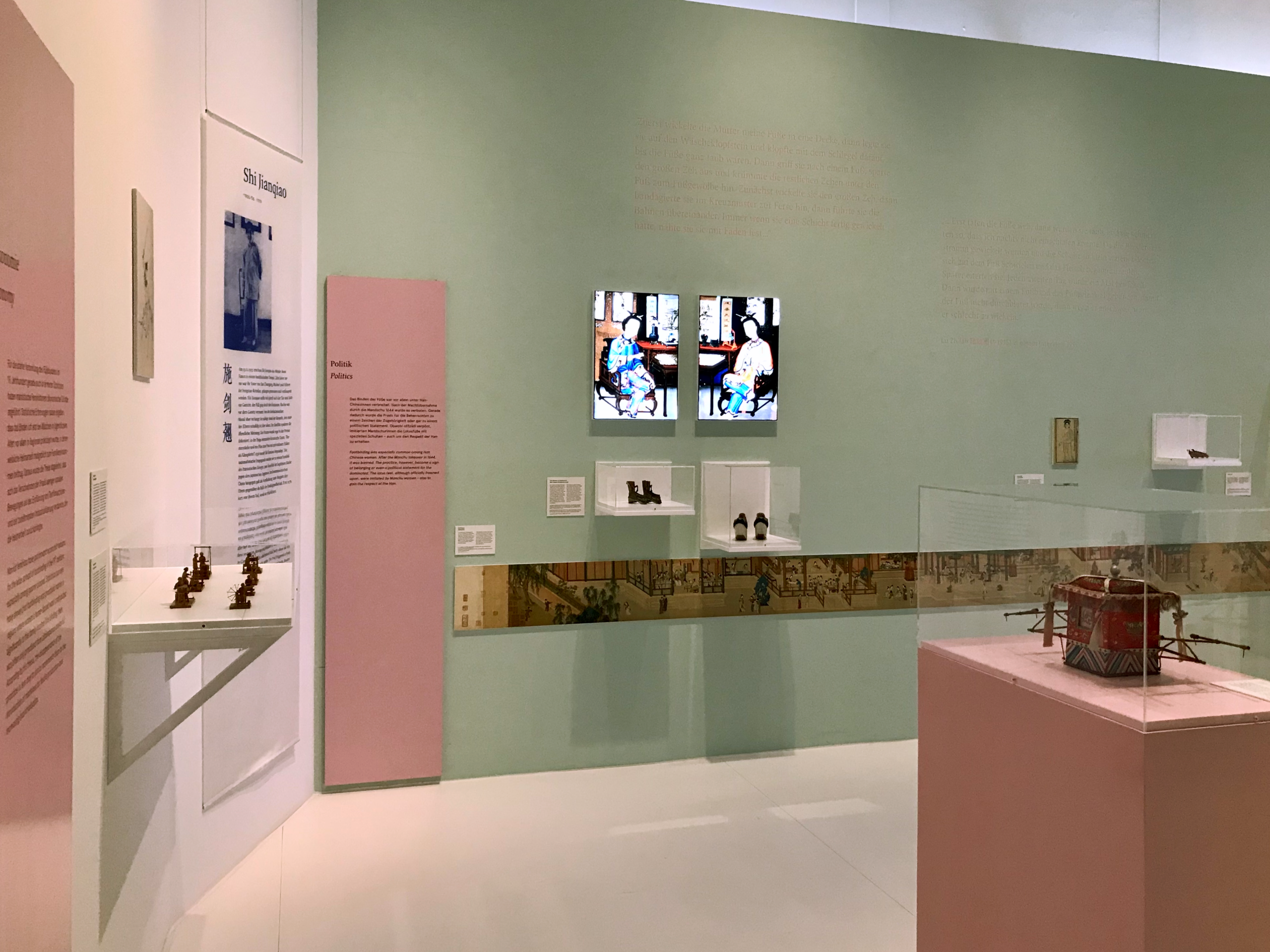
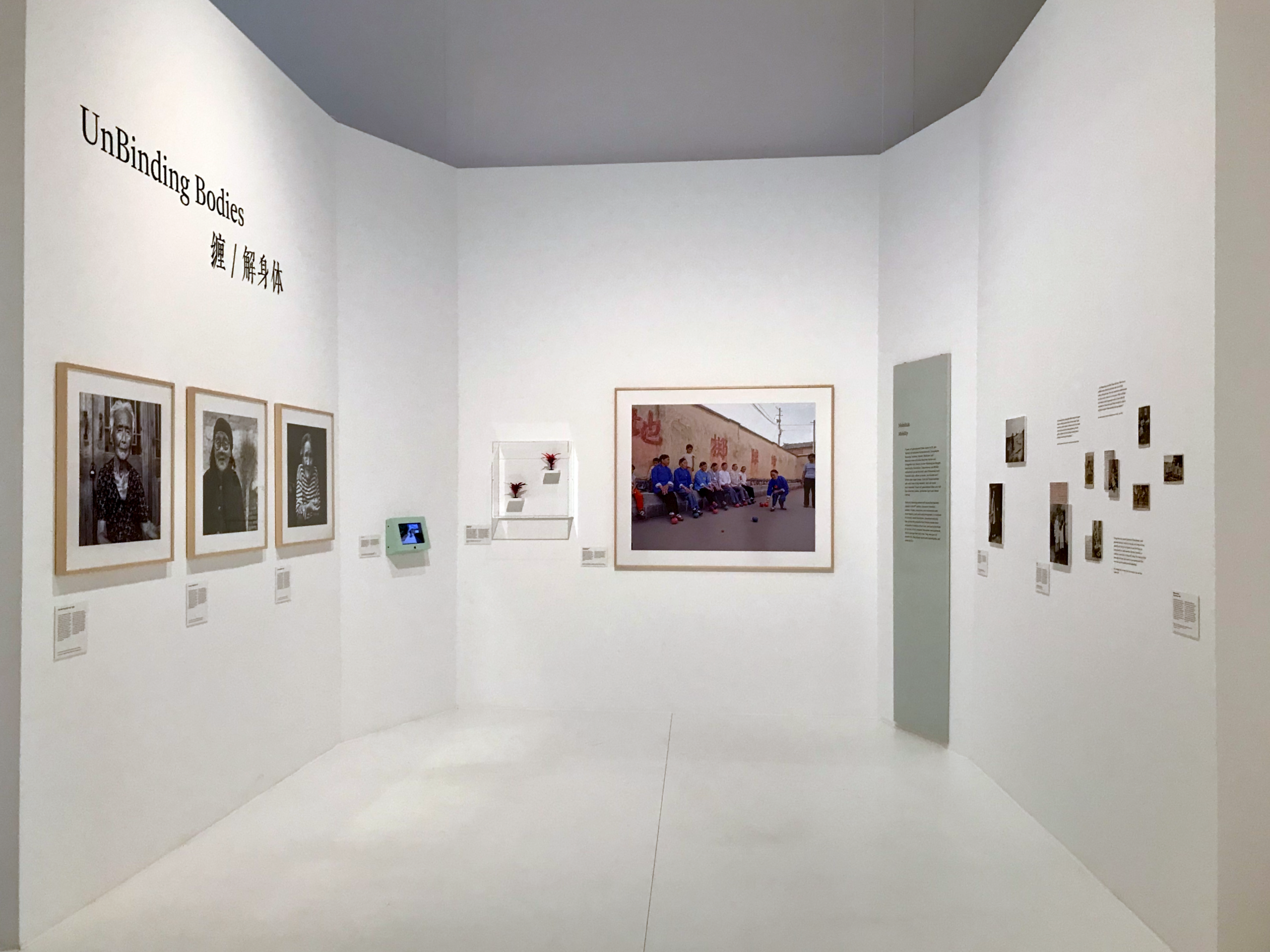
For a thousand years, Chinese girls had their feet bound to keep them as small as possible. Europeans looked at this ideal of beauty with a mixture of fascination and astonishment. In the 19th century, doctors also became interested in the so-called “lotus feet“. Many such specimens can still be found in scientific collections today.
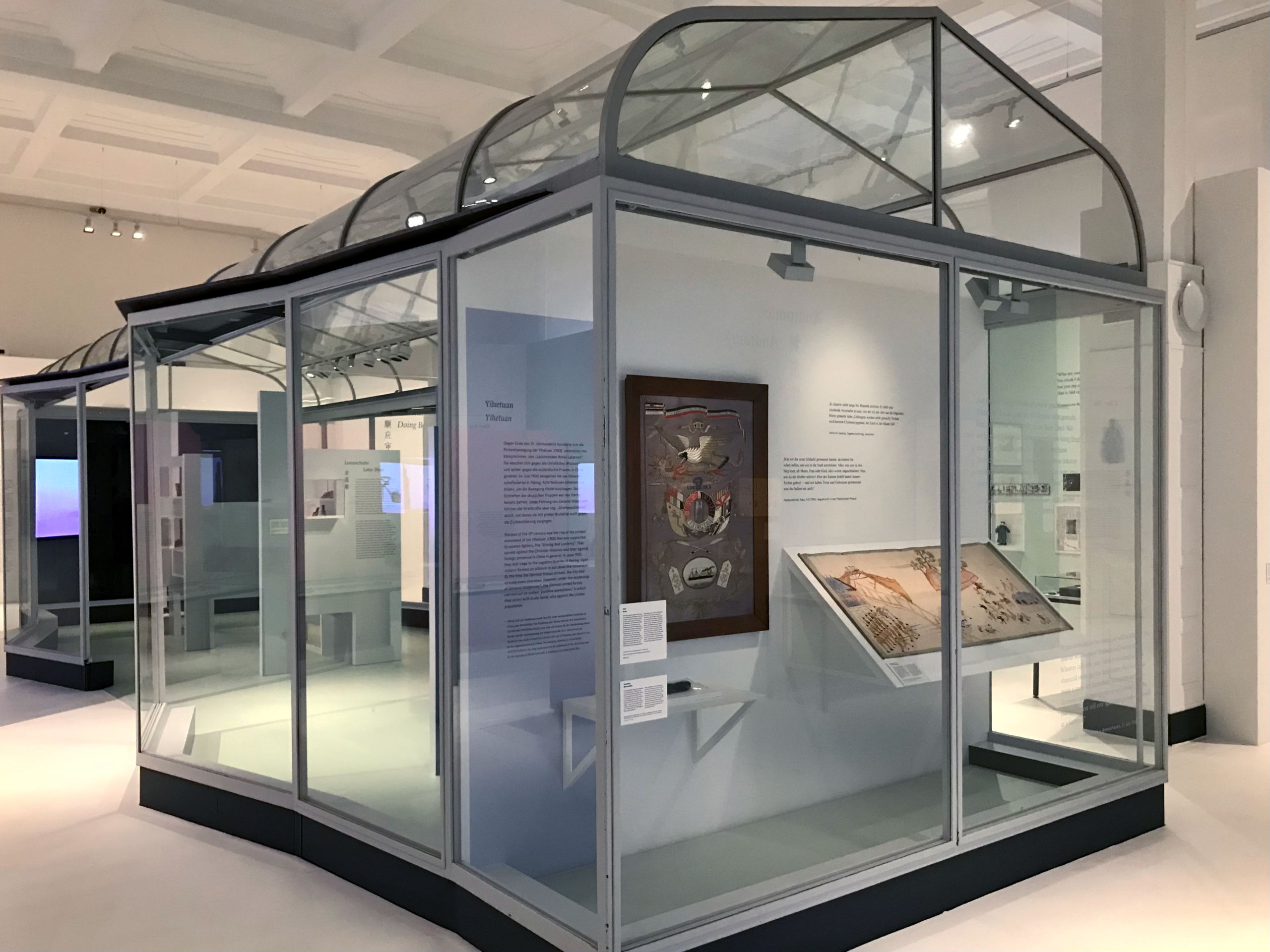
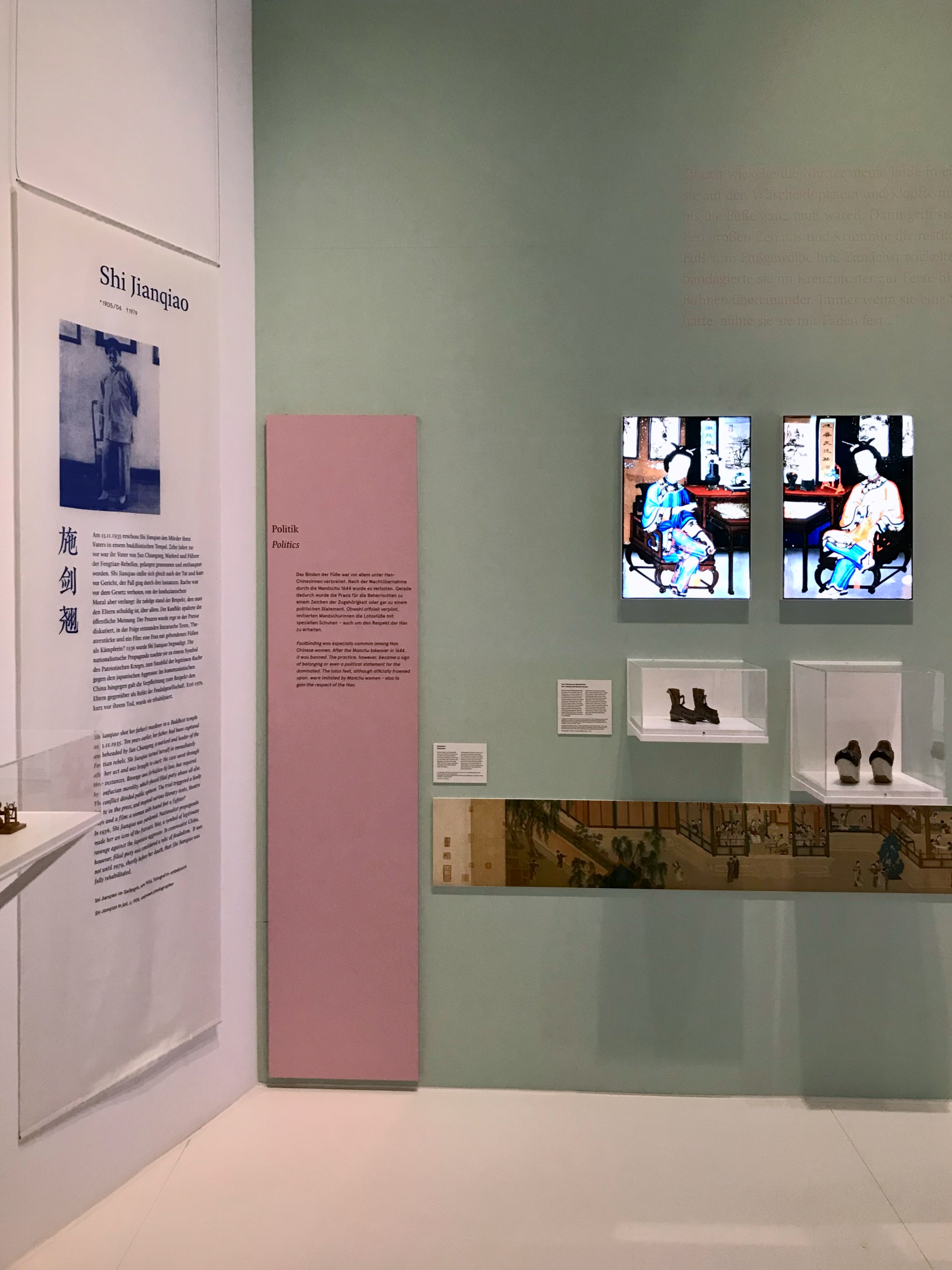
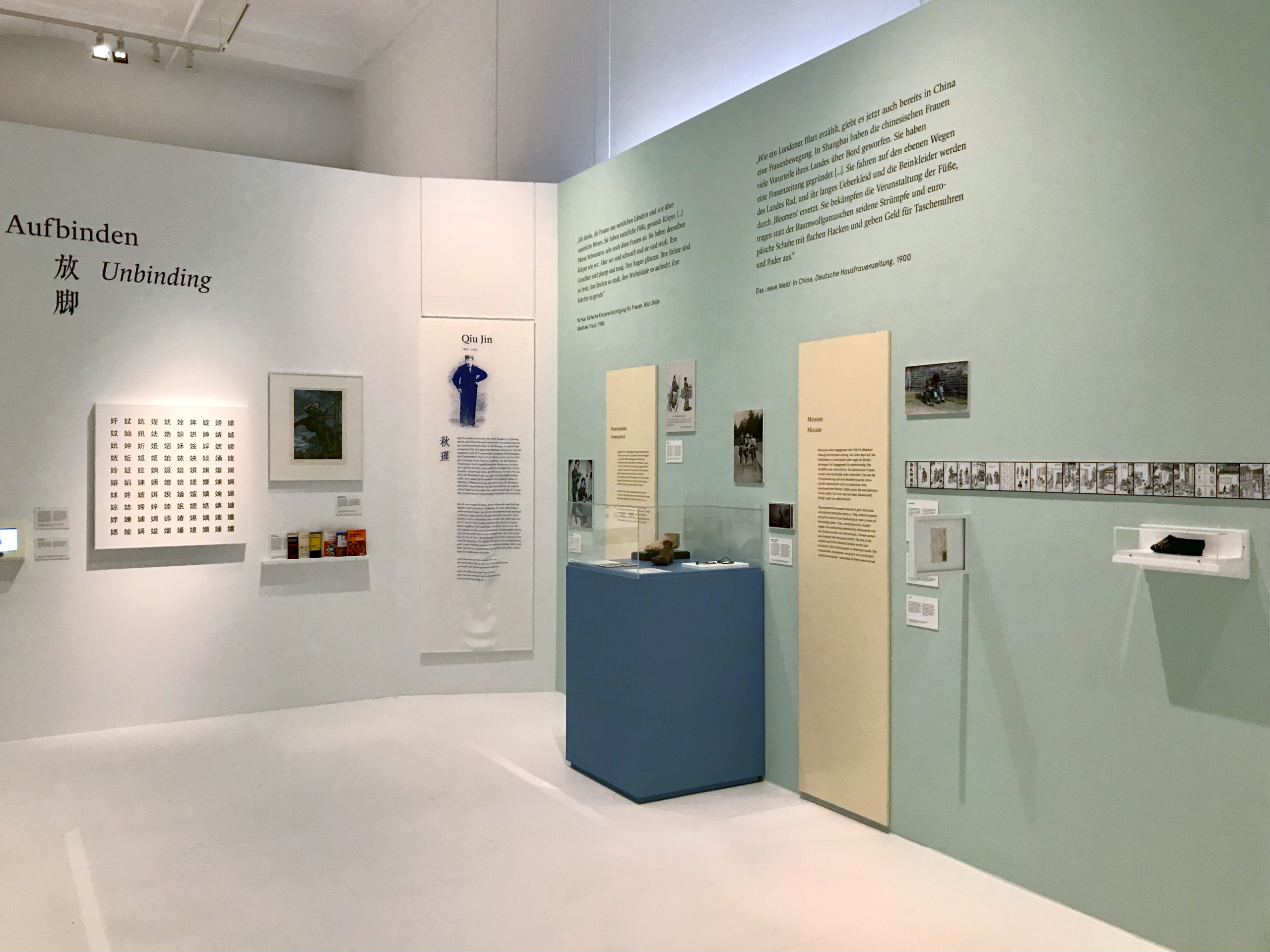
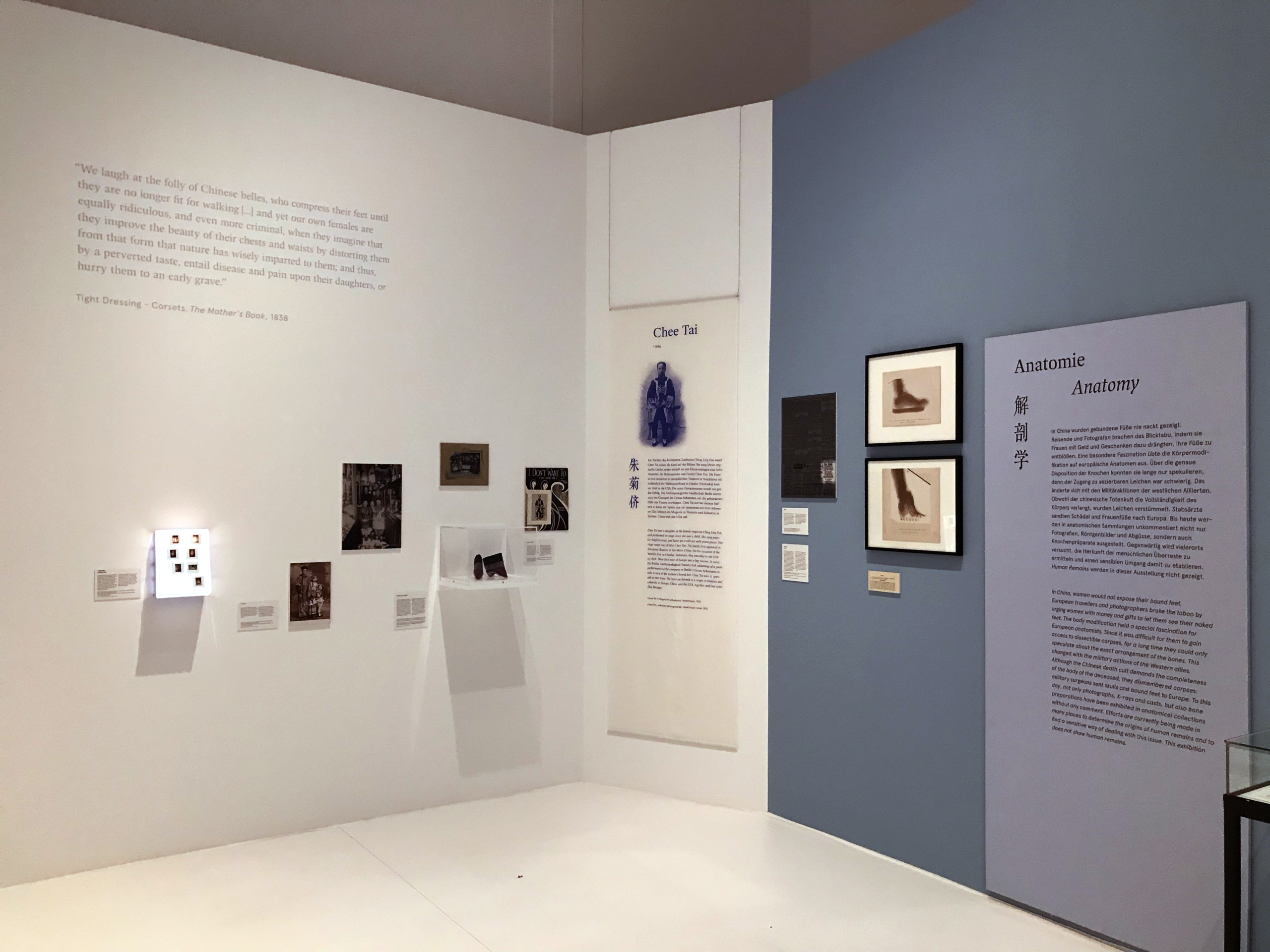
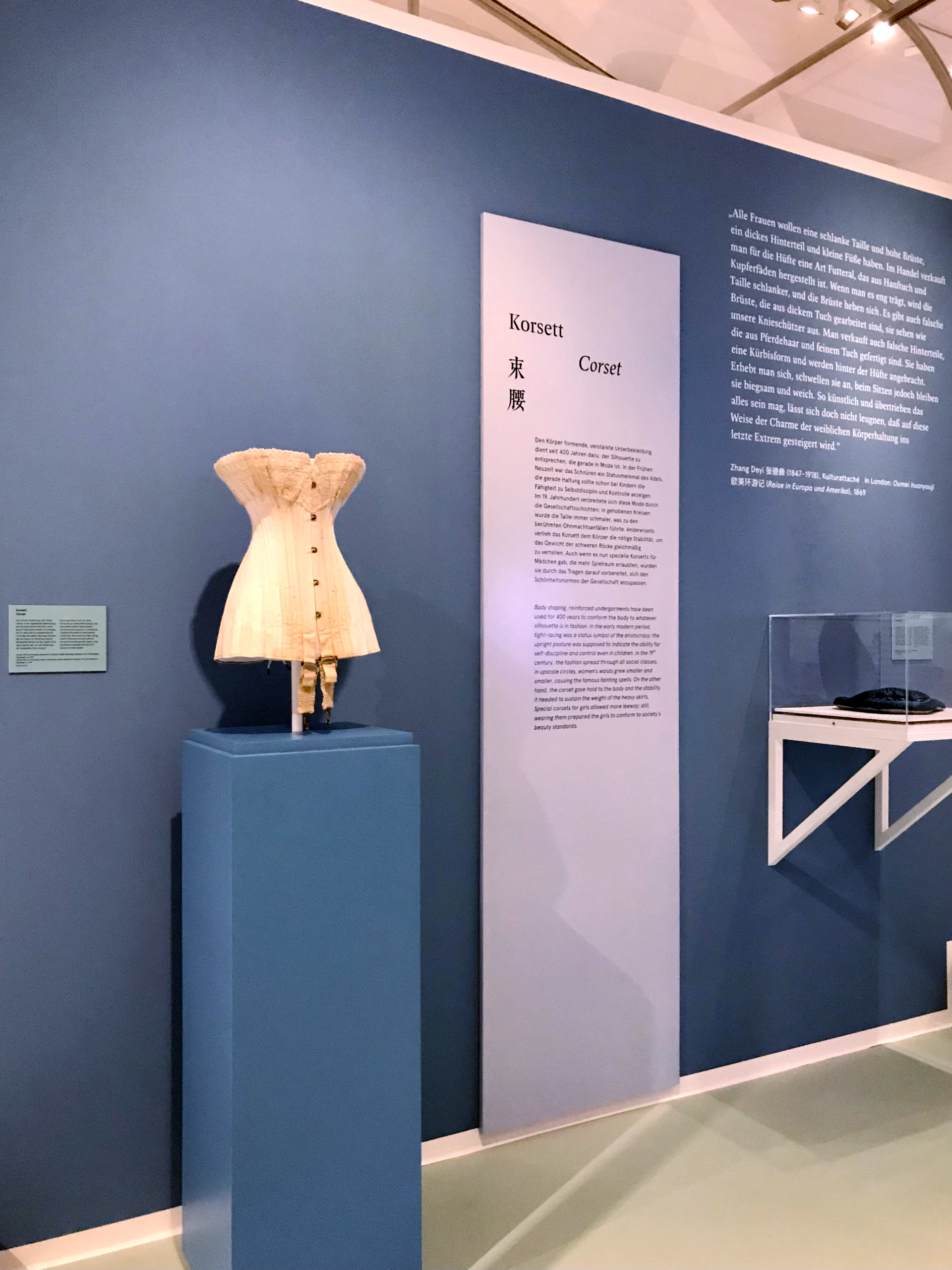
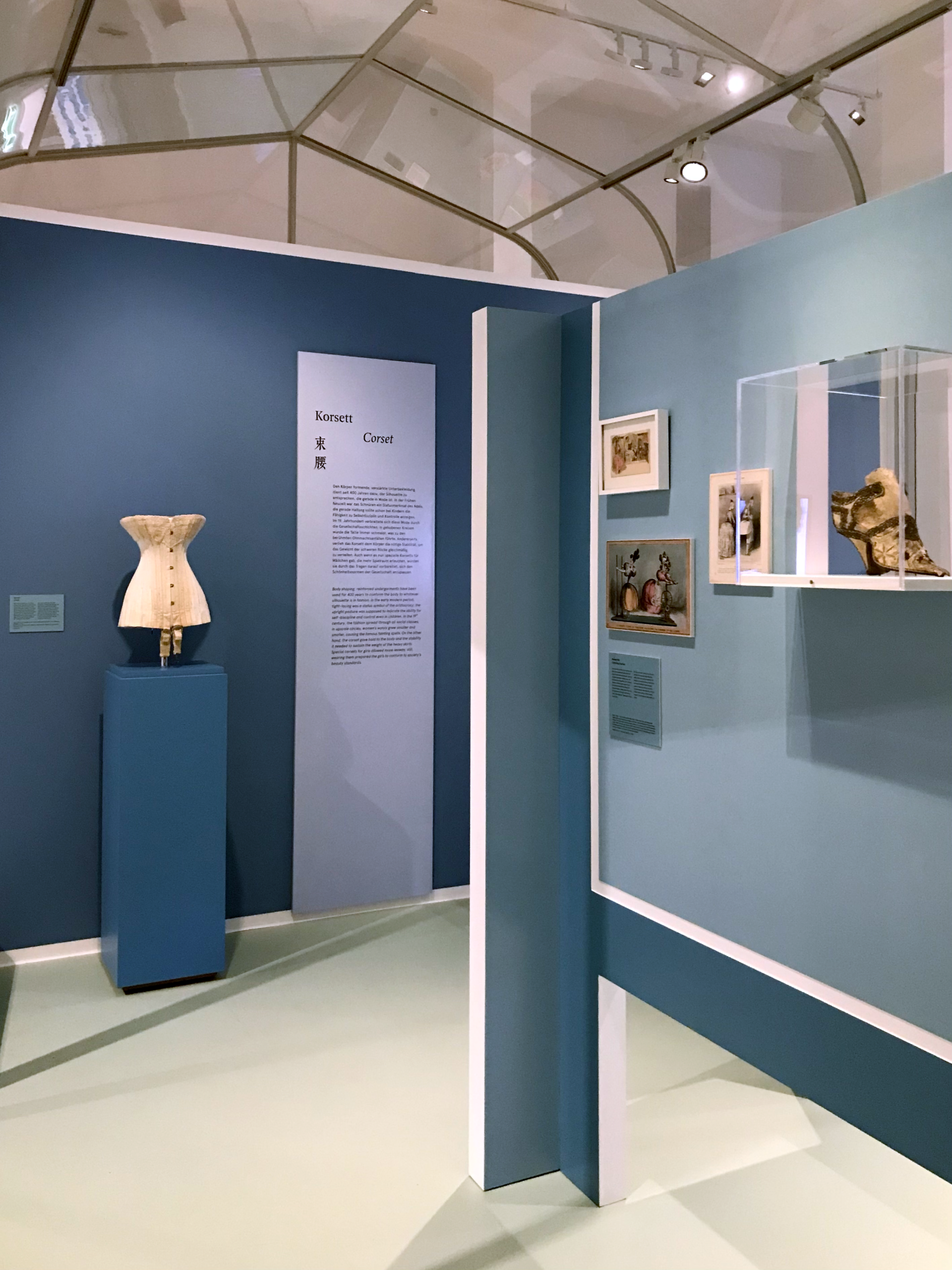
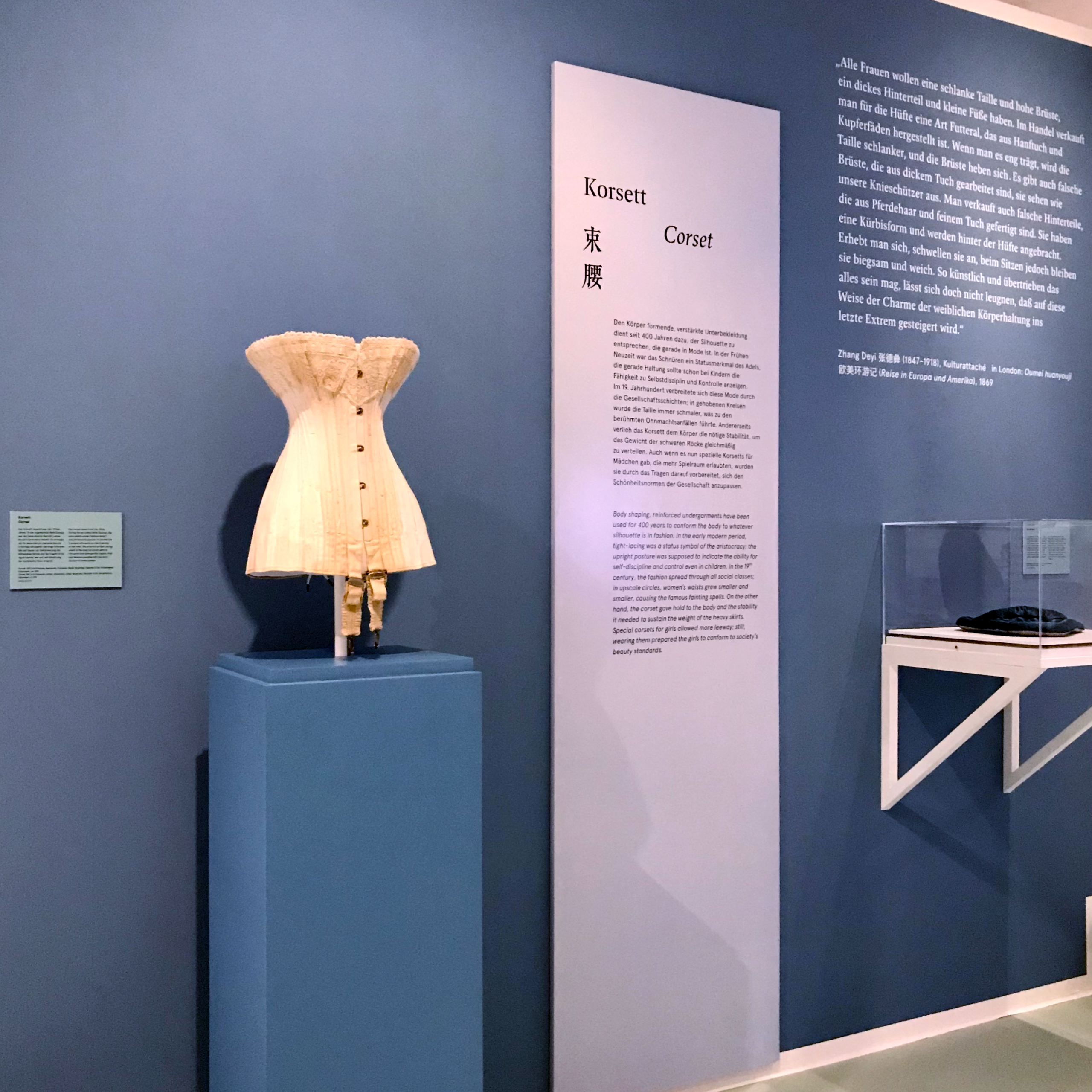
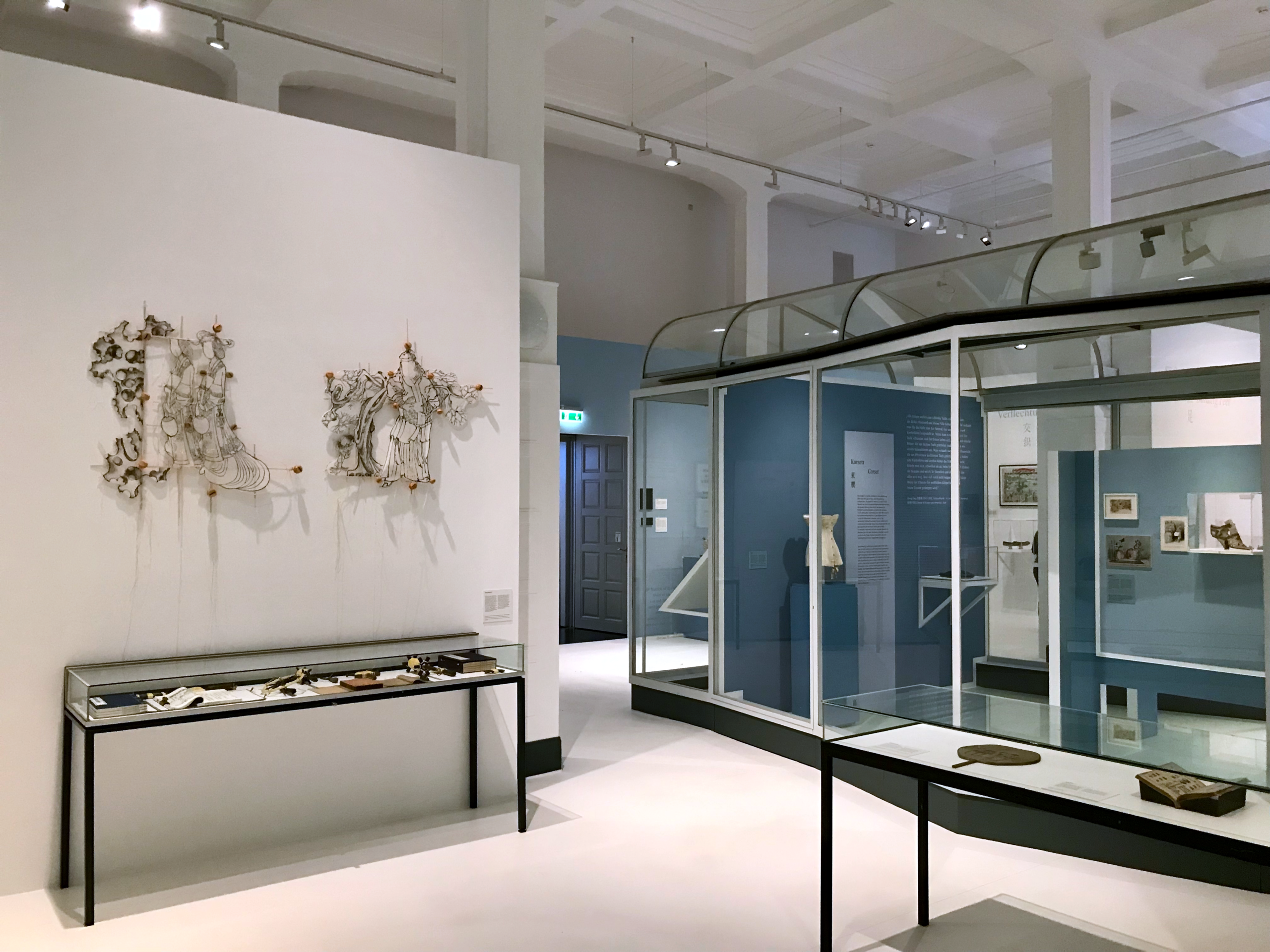
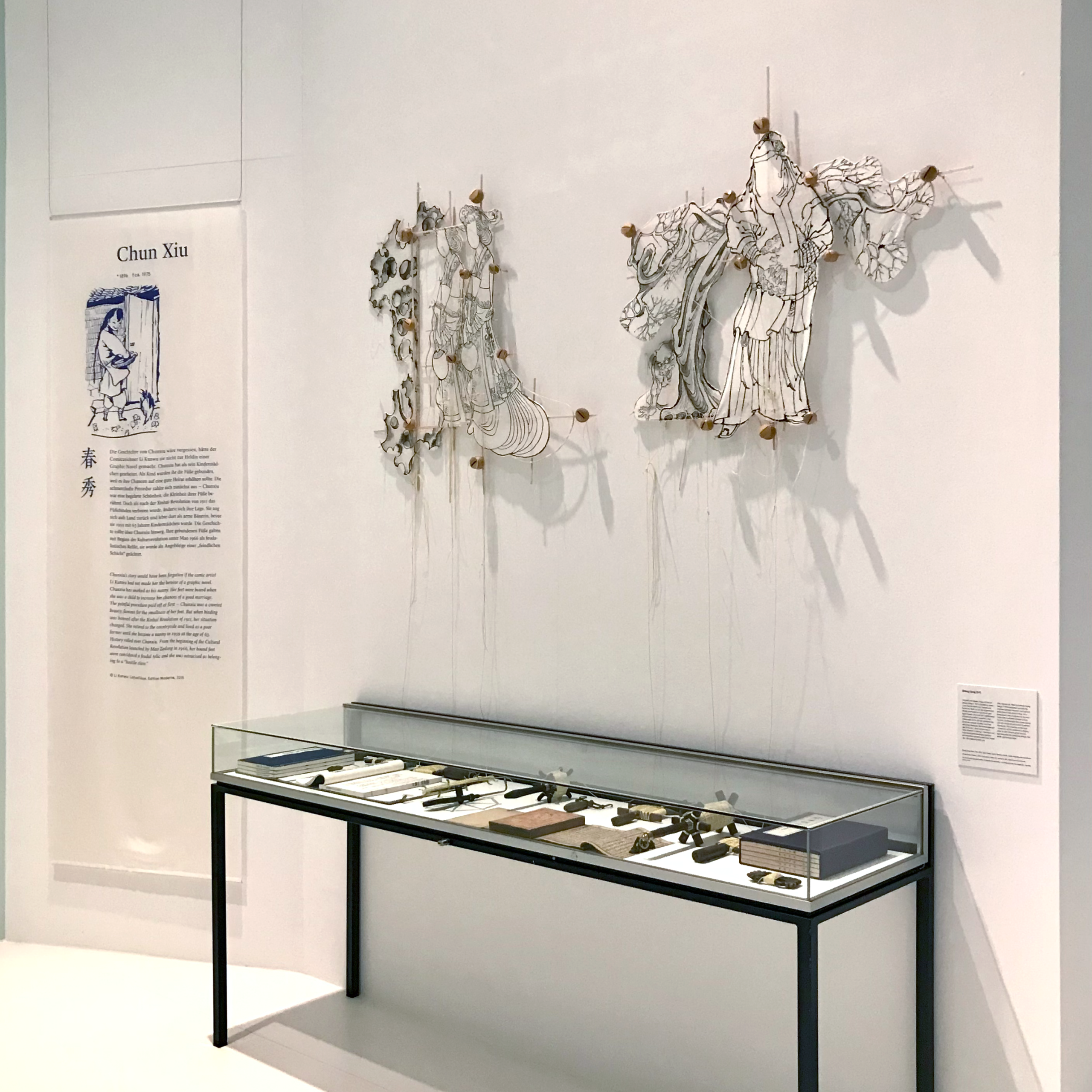
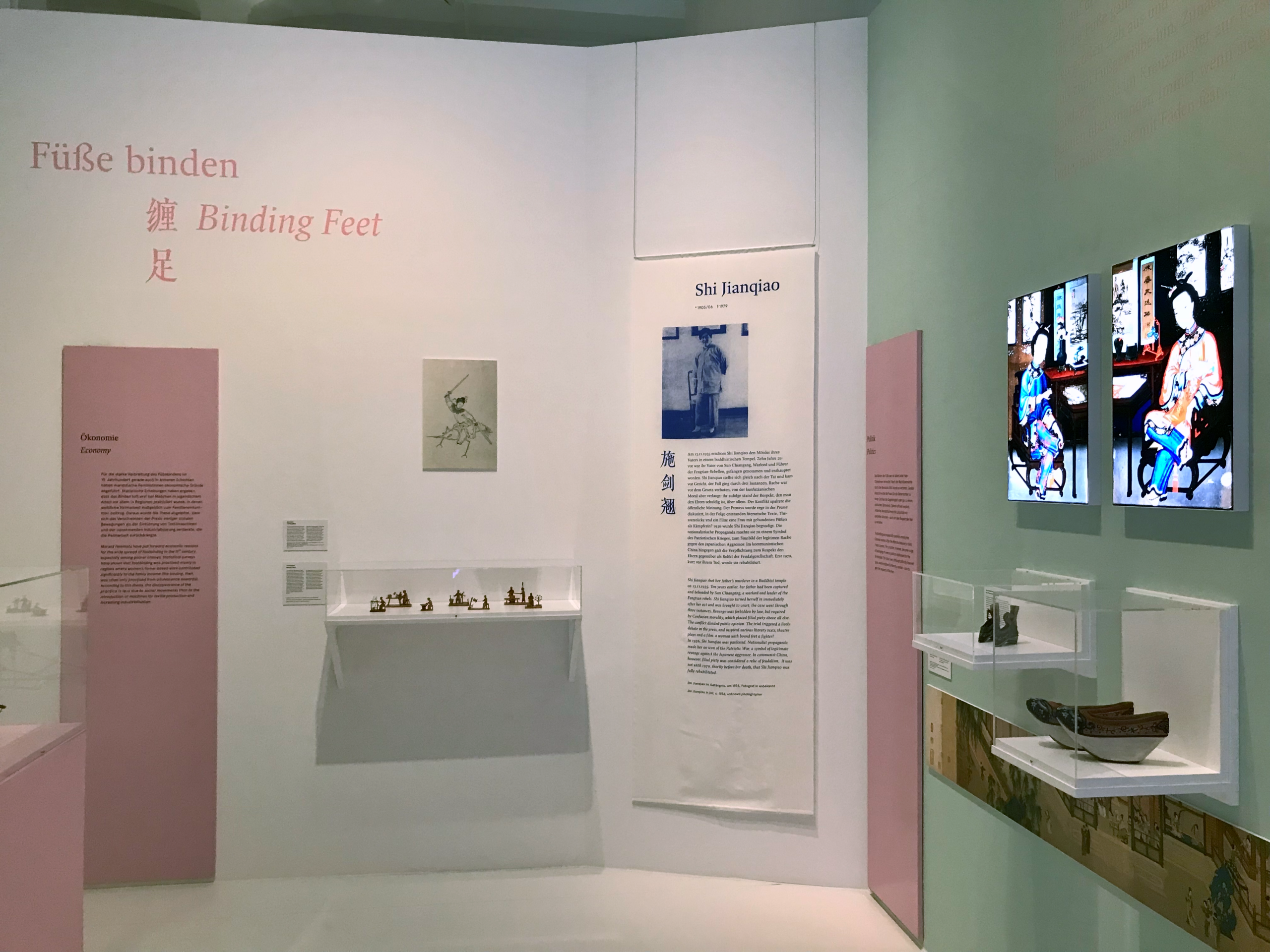
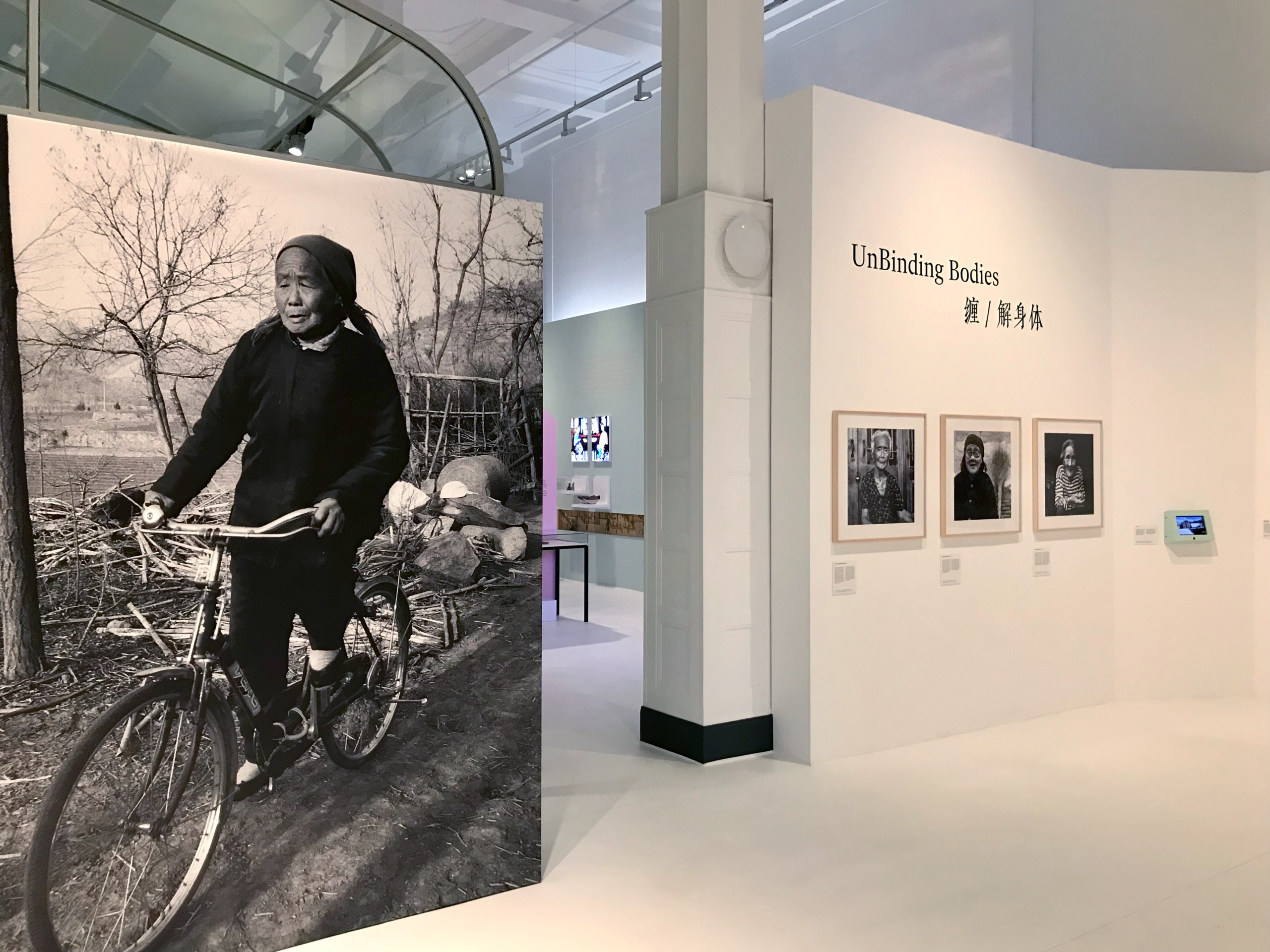
The exhibition shows these sensitive things against the background of social, colonial and medical history. It examines foot-binding as a situated practice that not only restricted women but also had an identity-forming effect. One focus is on the interplay of self-perceptions and foreign perceptions and the intertwining of Chinese and European emancipation movements: Parallel to the initiatives for “foot liberation“, women in Europe fought against the corset. The exhibition gives women a voice. Artistic positions by Zhang Gong, kate-hers RHEE and Zhang Rui enter into a dialogue with the exhibition and open up the perspective on beauty norms and the conditioning of bodies in the present.
Related events

Credits
An exhibition of TA T – Exhibition Research Space, Humboldt University Berlin, MARKK – Museum am Rothenbaum Kulturen and Künste der Welt and University of Arts Linz
Head TA T:
Felix Sattler
Director MARKK:
Barbara Plankensteiner
Scientific Project Lead:
Jasmin Mersmann
Curators:
Jasmin Mersmann, Evke Rulffes, Felix Sattler
Curatorial Assistant: Tian Lu
Interns: Maren Brammer, Sun Ye
Curatorial Team at MARKK:
Susanne Knödel, Assistant: Gesine Fehr
Artists:
kate-hers RHEE, Zhang Rui, Zhang Gong
Exhibition Design:
Caspar Pichner
Graphic Design:
Studio Wu 無 – Wu Yimeng, Milena Bolland
Exhibition Management:
Carl Triesch
Assistant: Daria Dörksen, Josefine Schlebeger
Public Program & Education MARKK:
Rilando June Lamadjido, Gabriel Schimmeroth
Provenance Research:
Susanne Knödel, Skadi Sarnoch, Gesine Fehr
Public Relations & Marketing TA T:
Marlene Bart
Public Relations & Marketing MARKK:
Sarah Khan-Heiser, Christine Ziesmer
Consultancy:
Dorothy Ko
Advisory Board:
Han Congyao, Mareile Flitsch, Dorothy Ko,
Carina Phillips, Thomas Schnalke, Susanne Wernsing, Zhu Yijie
Translations:
Anke Mai, Tian Lu
Proofreading:
Susanne Knödel, Gesine Fehr, Tian Lu
Conservation, Mounting, Arthandling:
Marika Kesler, Farideh Fekrsanati, Diana Gabler, Christiane Höber, Anett Arnold, Aika Schnacke, Ruxandra Sturm, Ella von Riesenbeck; Sami Ben Larbi (Exponat Berlin), Intern: Gesine Haupt
Exhibition Construction (MARKK and TA T):
Michael Beuttenmüller, Dirk Hanten, Andrej Goloborodko, Bastian Freyer and team, Filmkulisse Hamburg
Photo Archive:
Catharina Winzer
Photography:
Paul Schimweg (MARKK), Michael Pfisterer (TA T)
We extend our thanks to all staff members of the HU Berlin and MARKK, who contributed to the realization and operation of this exhibition, both in front and behind the scenes.
Thanks also go to:
Lars Amenda, Konrad Angermüller, Yorick Berta, Louisa Blenke, Paul Feigelfeld, Evelin Heuckendorf, Hannimari Jokinen, Nora Henneck, Helena Heroldová, Barbara Huber, Mechthild Leutner, Margit Leverkühne, Tony Li, Angelika Messner, Rupprecht Mayer und Haitang Mayer-Liem, Amir Moghaddass Esfehani, Juliane Noth, Gesine Parzich, Gabriel Schimmeroth, Gisela Schmidtbauer, Anna Szöke, Carl Triesch, Silke Urbanski, Andreas Winkelmann, Wang Weiqi 王玮琦, Angelika Wonisch
Funded by:
Funded by the German Federal Cultural Foundation
Federal Government Commissioner for Culture and the Media
Stiftung Preußische Seehandlung
Alfred Toepfer Stiftung
Restoration funding: Ernst von Siemens Kunststiftung
Kulturpartner:
NDR Kultur
Easy Read Version
unBinding Bodies. Lotus Shoes and Corset
For many centuries, Chinese girls had their feet bound.
The feet were kept as small as possible.
Small feet were seen as beautiful.
European people looked at this practice with fascination.
They also found it strange.
In the 19th century, doctors became interested in these so-called lotus feet.
Many of these feet are still kept in scientific collections today.
The exhibition
The exhibition looks at the history of foot binding.
The exhibition explores:
- society
- colonialism
- the history of medicine
Foot-binding had different meanings for women.
It restricted women’s bodies.
But it could also be part of a woman’s identity.
The exhibition asks:
How do people see their own bodies?
And how do other people see these bodies?
The exhibition also shows connections between China and Europe.
In China, people campaigned against foot-binding.
This movement was called foot liberation.
At the same time, women in Europe campaigned against the corset.
The corset was used to give the body a particular shape.
Art and beauty standards
The exhibition gives women a voice.
Artists Zhang Gong, kate-hers RHEE and Zhang Rui show works alongside the historical objects.
The artworks explore ideas about beauty.
They also ask:
How are bodies shaped and changed today?