Magazine #3: What Is the Political in the Relationships Between Humans and Plants?
The interdisciplinary group Kontaminiert Werden (Alena Trapp, Jann Mausen, Maja Avnat) explores urban ecologies and more-than-human social relations. The entanglements between humans and plants in the city are multidimensional — aesthetic (representational and/or embodied), technological (teleological), and shaped by knowledge traditions. Their analysis requires inter- and transdisciplinary approaches. We are working to establish a public forum in which situated research and debates are taken up and discussed with critical attention to power relations and historical contexts. With support from anatomia publica, we aim to continue the conceptual work for Kontaminiert Werden Magazine #3. Our deliberately open guiding question is: What is the political in the relationships between humans and plants?
Kontaminiert Werden will be in residence with us from November to December 2025.
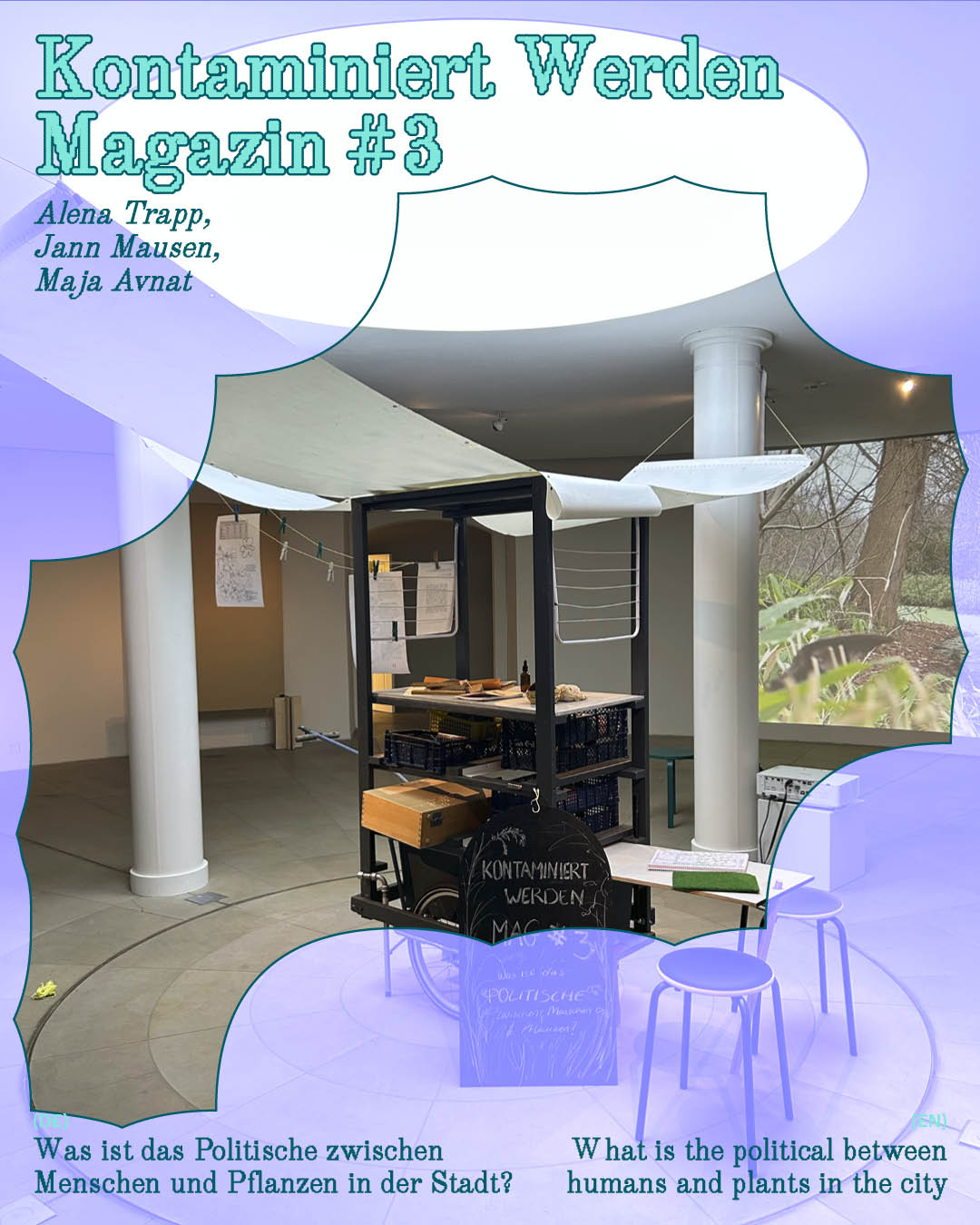
Kontaminiert Werden at the Tieranatomisches Theater
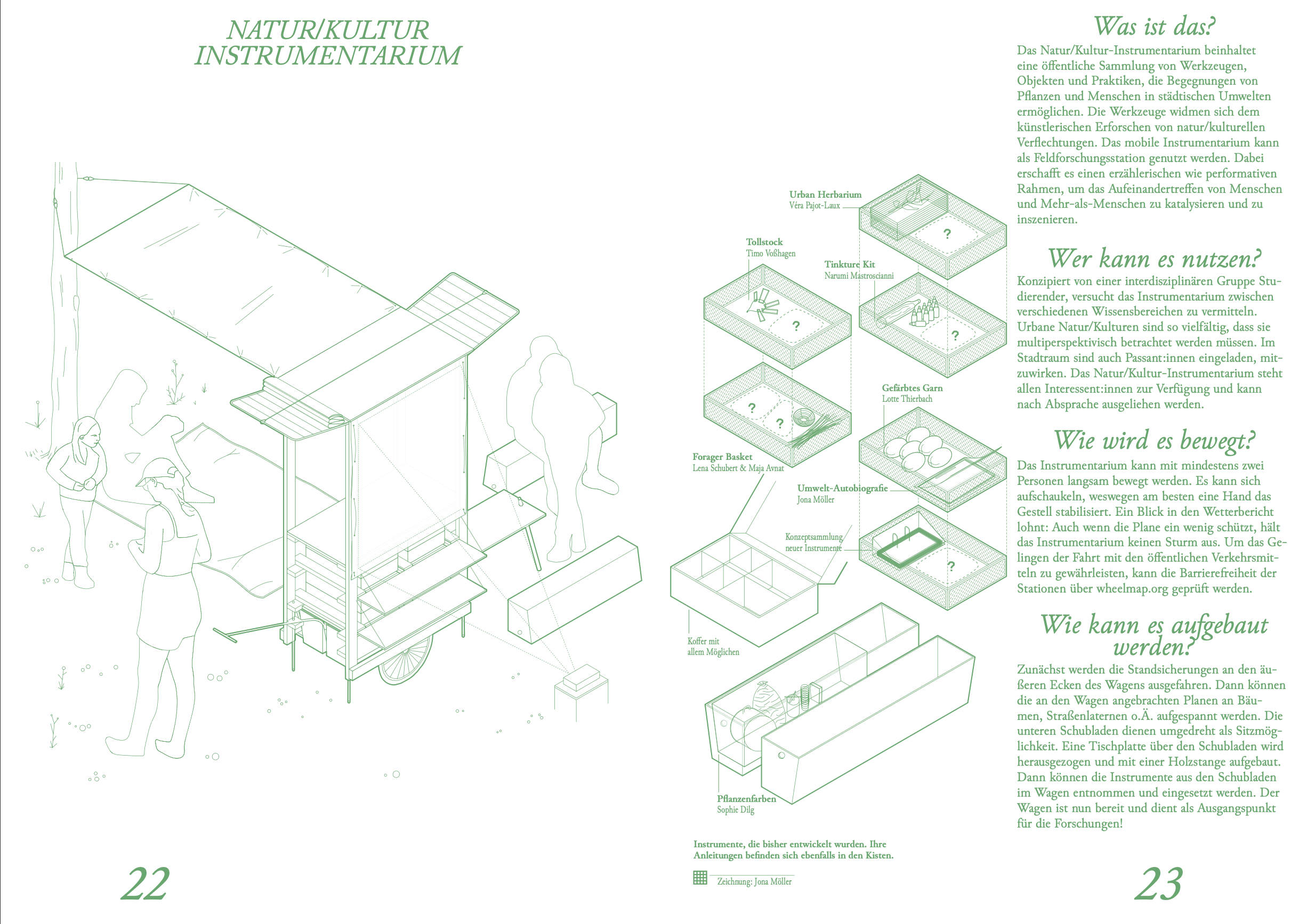
Kontaminiert Werden will temporarily inhabit the Tieranatomisches Theater to publicly develop Magazine #3 and make collective research processes visible. At the center stands the Natur/Kultur Instrumentarium — a mobile research assemblage that investigates and makes tangible the entanglements between humans and plants in urban environments. In collaboration with the Späth-Arboretum (Dr. Anika Dreilich), ecological field methods such as the Bioblitz will be explored to connect artistic and scientific perspectives on urban ecologies.
The project functions as an open laboratory that brings together members of the Kontaminiert Werden network and expands through further contributions. Between November 26 and December 13, a range of formats — including screenings, workshops, readings, and performative insights — will invite the public to participate and exchange ideas. The knowledge exchange highlights are planned for December 10–13.
Paz Ponce – TA T Curator for Mediation & Outreach
E-mail: anatomiapublica.tat@hu-berlin.de / Phone: +49 (0)30 2093 46625
For further information about our residency program, please visit the homepage or TAT Aktuell.
In the KW Magazin #3 LABOR, numerous members of the Kontaminiert Werden Network collaborate as invited artists and researchers. Their contributions range from artistic practice, ecological and somatic research, and urban ecology to decoloniality, storytelling, and documentary and installative methods. Together, they shape workshops, screenings, installations, performative insights, open rehearsals, and experimental research stations.
In the spaces of the TAT, installations and films are also on view that were created in the context of Kontaminiert Werden Magazin #2 and #3, making ongoing reflections on plant–human relations, urban ecologies, and collective research processes visible.
With contributions by:
michela filzi, Vitor García de Almeida, Lisa Hofmann, Vincent Jondeau, Jonathan Joosten, Taiane Linhares, Jasmine Parsley, Ivana Papić, Marina Resende Santos, Senta Karolina Bannick,
and in cooperation with Dr. Anika Dreilich (Späth-Arboretum).
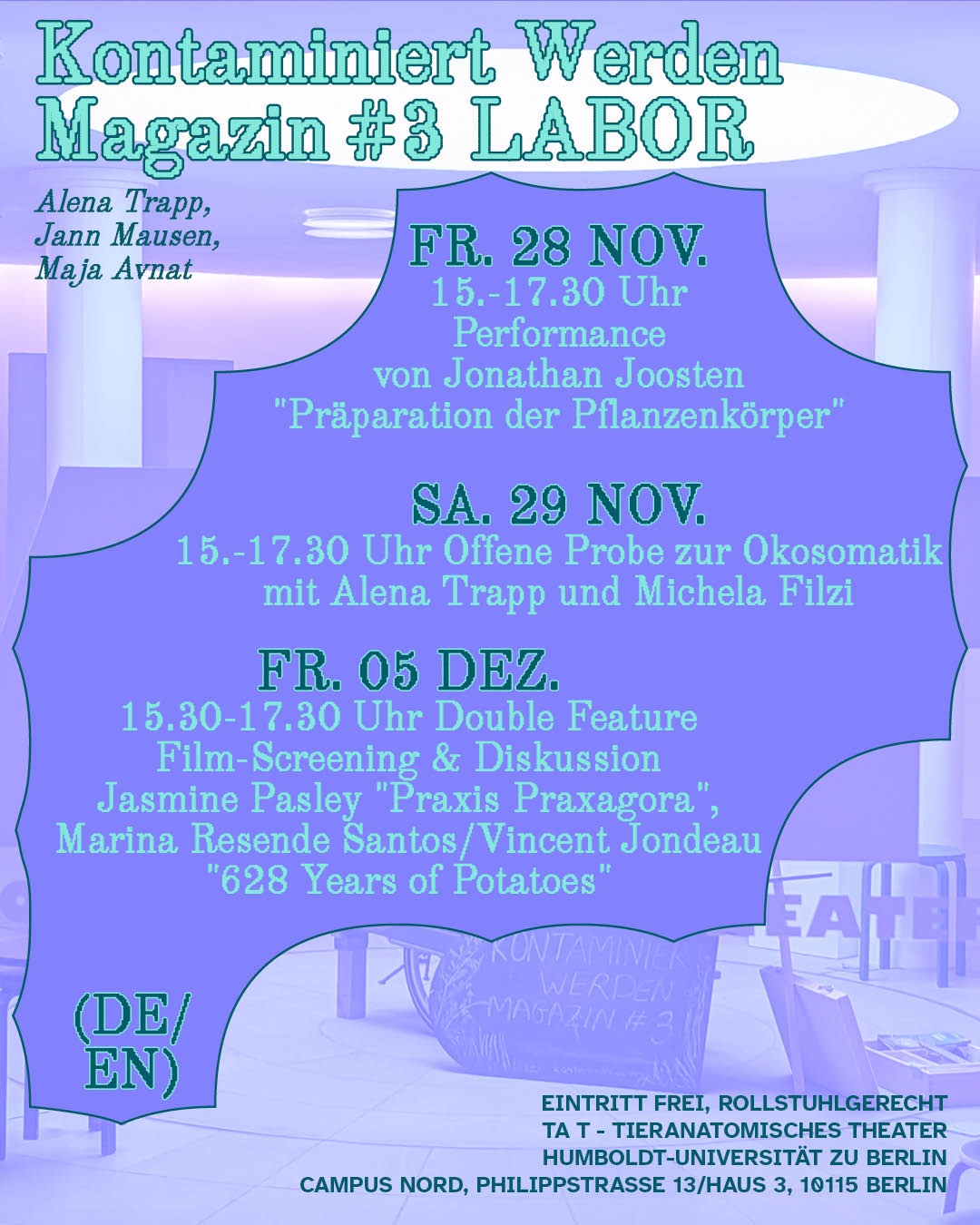
Performance “Preparation of Plant Bodies”
by Jonathan Joosten
Description:
From a thicket of anonymous branches, plant bodies are carefully extracted and fixed onto sheets of paper. Healing plasters on leafless skin gesture toward vulnerability. The performance explores the provisional preservation of plant bodies and reflects on botanical collection practices.
Short Biography:
Jonathan Joosten is a Berlin-based multimedia and research-based artist. His work investigates transitions between urban and “natural” spaces, as well as narratives and memories. Recent projects include research on herbaria, high-water marks, and fire salamanders. His practice spans video, print, installation, performance, and sound art.
Open Rehearsal for Eco-Somatics
with Alena Trapp and Michela Filzi
Description:
Alena Trapp and Michela Filzi work in the field of eco-somatics and movement research. They explore how movement, perception, and smell can enable forms of communication between human and more-than-human beings. The open rehearsal offers insights into the development of an eco-somatics workshop and opens the research process to participation and collective learning.
Short Biographies:
Michela Filzi is a multidisciplinary artist who explores plant-based and somatic encounters through storytelling, herbalism, and dance.
Alena Trapp works across performance, dance, sound, and political philosophy; their queer-feminist practice investigates power relations and more-than-human entanglements.
Double Feature Film Screening & Discussion
Jasmine Pasley “Praxis Praxagora” and
Marina Resende Santos & Vincent Jondeau “= 628 Years of Potatoes”
Description:
“= 628 Years of Potatoes” tells the story of a young woman who claims an unused plot of land in a largely overlooked part of Berlin. The site transforms as neighbourhood children begin to play there, plant potatoes, and join in the harvest. The filmmaker appears as the supposed landowner, questioning property relations and ownership structures. This award-winning film explores land, appropriation, and the question of how value is created on urban ground.
Short Biography:
Marina Resende Santos is an artist and researcher based in Berlin. Her work connects ecology, technology, and performative interventions. She has taught in Weimar and Berlin and exhibited internationally.
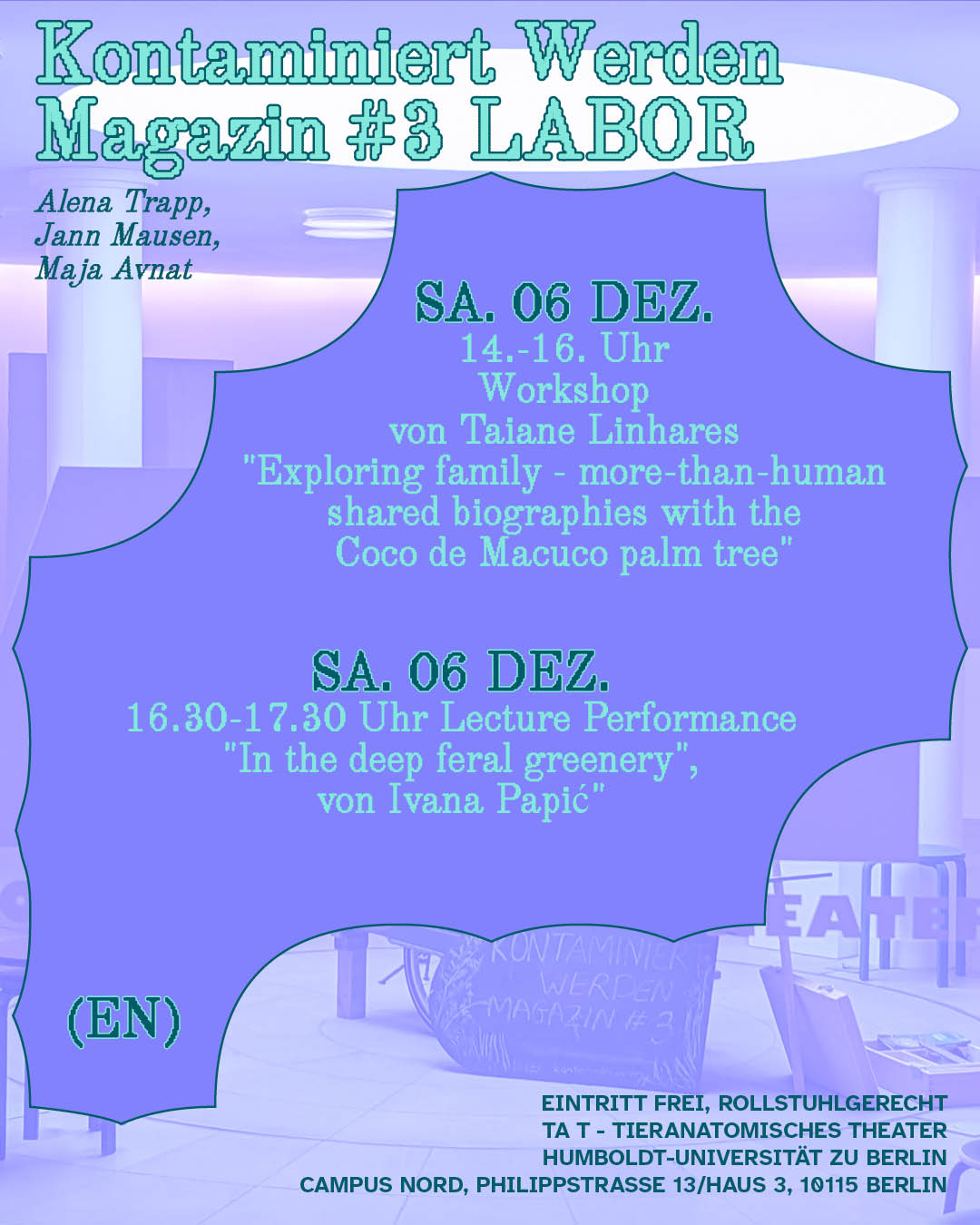
Workshop “Exploring family – more-than-human shared biographies with the Coco de Macuco palm tree”
by Taiane Linhares
Description:
This workshop invites participants to reflect on plants that hold personal significance. Taiane Linhares demonstrates how botanical databases, historical documents, family photos, and field research can be used to explore relationships with the more-than-human world. The aim is to sharpen awareness of one’s own plant connections and shared biographies.
Short Biography:
Taiane Linhares works on ecology, technology, and decoloniality. Her artistic practice examines racialization, biological taxonomy, and forms of knowledge production with non-human entities through writing, painting, embroidery, and film.
Lecture Performance “In the deep feral greenery”
by Ivana Papić
Description:
This lecture performance introduces the life stories of plants considered “invasive” or resilient. Ivana Papić follows tree of heaven, goldenrod, and black locust, opening perspectives on coexistence rather than eradication. The session includes insights into her artistic practice, a brief plant-focused workshop, and a guided meditation with reflection.
Short Biography:
Ivana Papić is a visual artist whose work explores urban vegetation and resilient plant species. Her practice combines research, performance, and spatial investigation.
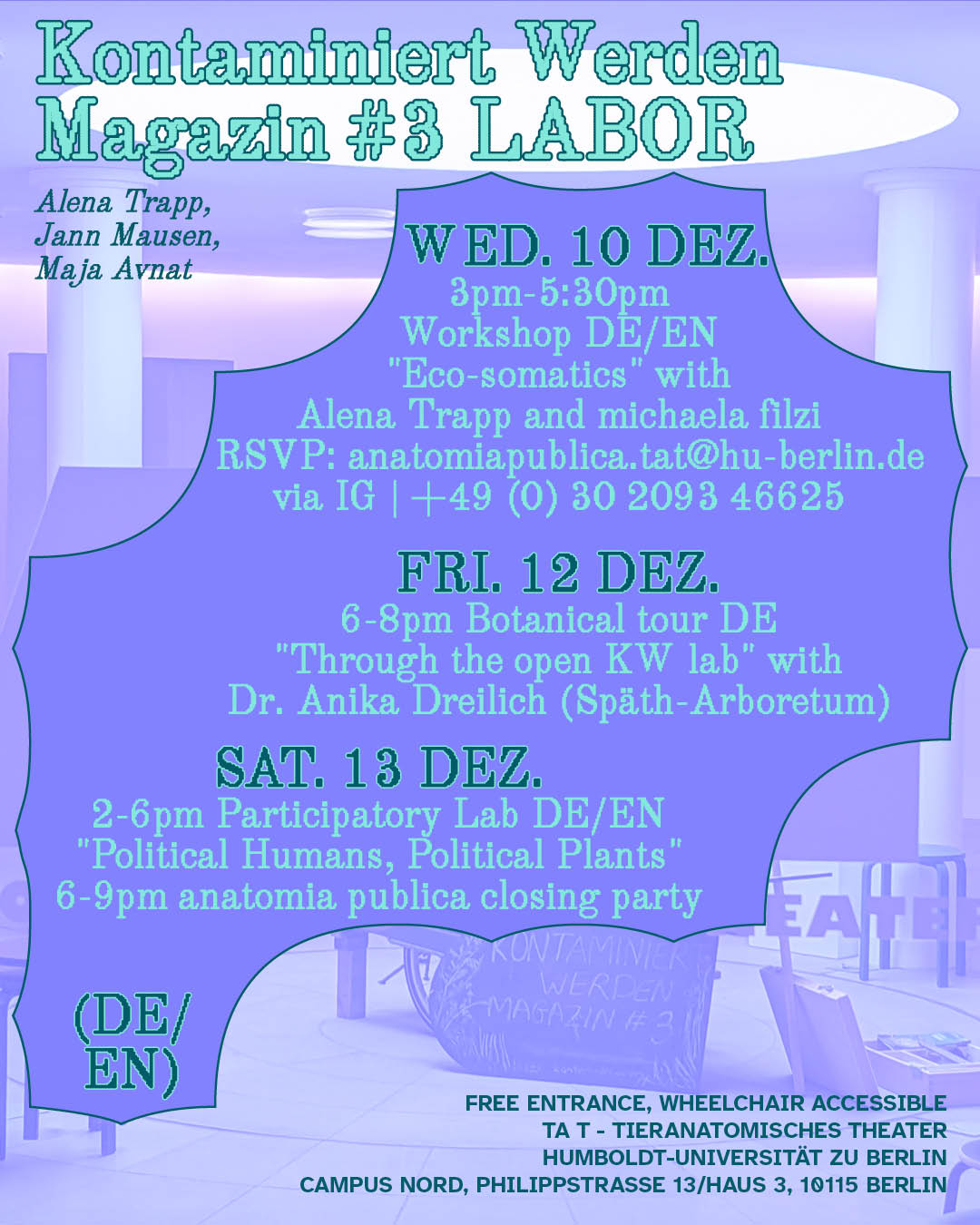
Description: The workshop uses body knowledge as a starting point to explore political relations between humans, plants, and other more-than-human beings. Through ecosomatic exercises—situated between dance, philosophy, and critical theory—we question dualisms such as subject/object or activity/passivity, as well as colonial notions of body and environment. Centered on situated, embodied methods of (un)learning, the workshop opens pathways toward new forms of perception, responsibility, and agency. Participation is free; the building and all exercises are wheelchair accessible. Registration: anatomiapublica.tat@hu-berlin.de / via IG
Short bios: michela filzi is a multidisciplinary artist focusing on plants, sensory perception, and ecological storytelling. Her work brings together storytelling, herbal knowledge, and somatic dance. Alena Trapp (Erbse) works in performance, dance, sound, and political philosophy. As a queer feminist artist-thinker, Alena investigates power relations, constructions of identity, and interconnections within a more-than-human world.
Description:
During our residency at the Tieranatomisches Theater, we identified plants together with visitors using the iNaturalist app and collected them on a digital map. In addition to scientific data, plants appearing in films, embroideries, and postcards in TA T's rotunda were also included, expanding the collection with artistic and cultural perspectives and creating a rich foundation for discussion.
With Dr. Anika Dreilich, botanical expertise meets the research objects of the Kontaminiert Werden network. Together we discuss results of the mapping process, explore botanical backgrounds of plants around the Tieranatomisches Theater / Campus Nord, and attempt—during a shared walk through the exhibits—to bring scientific and artistic/cultural approaches into dialogue.
Short bio: Dr. Anika Dreilich is a botanist at the Späth-Arboretum researching urban vegetation, plant ecology, and biodiversity.
Description:
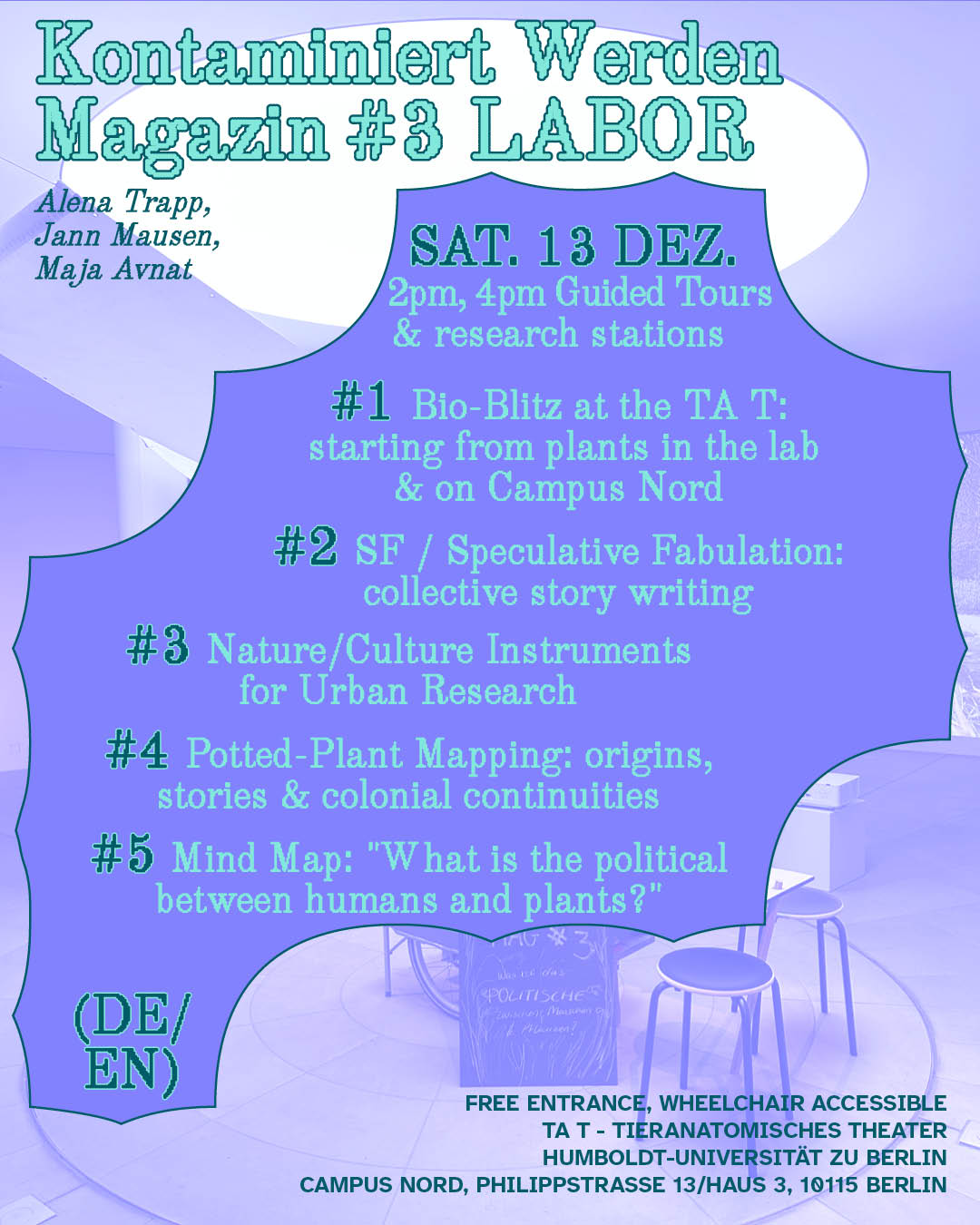
The Kontaminiert Werden network conducts interdisciplinary research on plant–human relations using artistic, design-based, natural science, and humanities methods. These relations reveal political constellations shaped jointly by humans and plants. For the upcoming magazine, the question of the political is central: What power structures can be identified in these relations? What forms of plant and human resistance emerge? What ethics shape them?
On 13 December, we invite visitors to join a guided tour through the lab. Afterwards, the audience is invited to work with us on these questions at five different research stations—through mapping, speculative fabulation, tracing the origins of houseplants, or designing research tools.
Guided Tours: 14:00 and 16:00. The stations are open throughout the event.
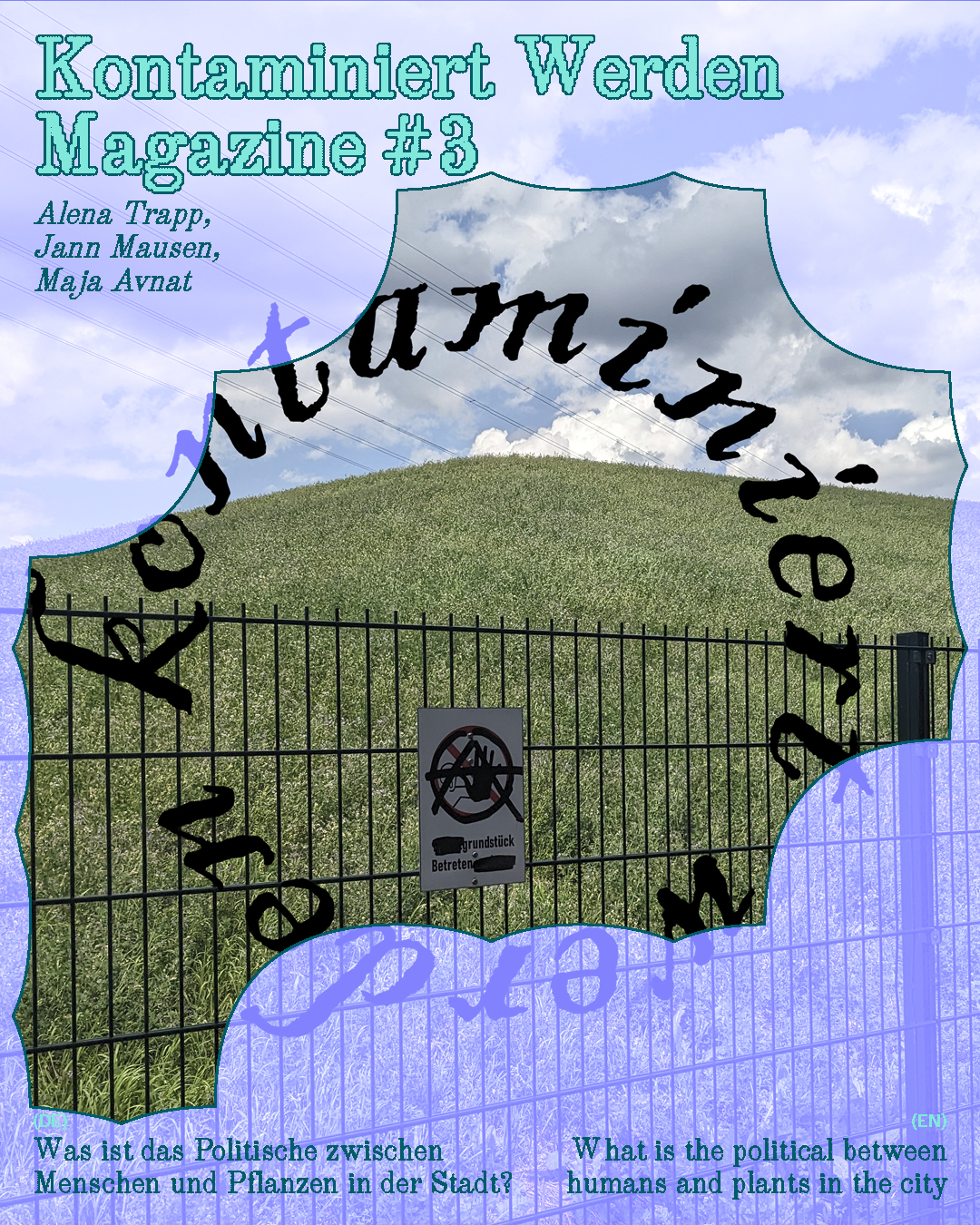
For anatomia publica, the following members of the Kontaminiert Werden network are involved: Jann Mausen, Alena Trapp, and Maja Avnat.
Jann Mausen – Cultural studies scholar (HU Berlin); works on urban ecologies and nature/culture entanglements; curates programs and scholarly formats; co-editor of KW Zine #1 and KW Magazine #2.
Alena Trapp – Artistic-academic practice across performance, dance, sound, and critical somatics; teaches at HU on (critical) embodiment; develops participatory formats to explore more-than-human entanglements.
Maja Avnat – Junior Researcher (Excellence Cluster Matters of Activity, weißensee kunsthochschule berlin); research in Liquid Yarns and Active Trees on textile, thermally active prototypes; develops site-specific audio walks (e.g., Späth-Arboretum) and projects such as Planted Archives; with KW since 2023, contributor to Magazine #2.
/@kontaminiert.werden/
Inspirations for KW’s engagement with human–plant entanglements in urban spaces include interdisciplinary projects such as the Feral Atlas (Anna Tsing et al., 2020) — a digital atlas of more-than-human field research in the Anthropocene — as well as the work of Matthew Gandy and Sandra Jasper (e.g., Natura Urbana; Botanical City), which highlight the significance of Berlin’s urban ecologies for (landscape) architecture, art, and urban history. For analyzing the political dimensions of human–plant relations, concepts such as Sandra Jasper’s “speculative ecologies” and Bettina Stoetzer’s “ruderal vegetation” are central, connecting gentrification and displacement, as well as artistic-activist counter-models, with ecological questions. Further inspiration comes from the Black Earth Collective (climate justice) and the Office for Radicalization Prevention in Nature Conservation (FARN).
Berlin offers numerous examples: botanical gardens play a decisive role in the selection and management of the city’s vegetation by participating in research on climate-resilient “trees of the future.” Looking at the historical background of botanical gardens as showcases of imperial power — and their influence on the import of houseplants into the city — also reveals colonial continuities that reach into Berlin’s living rooms.